Your Travel Partner
SINCE 1989
Your Travel Partner
SINCE 1989
Delhi – Nawalgarh – Bikaner – Deshnok – Jaisalmer – Jodhpur – Ranakpur – Udaipur – Chittorgarh – Pushkar – Jaipur – Fatehpur Sikri – Agra – Delhi
Rajasthan's past is preserved not in one architectural style but in an extraordinary succession of merchant mansions, desert fortresses, royal capitals, sacred towns and fortified hill settlements. The Historical Rajasthan Tour 15 Days follows these layers in geographical sequence, beginning with the painted havelis of Shekhawati and continuing through the former kingdoms of Bikaner, Jaisalmer, Marwar and Mewar before reaching Jaipur and the Mughal monuments of Agra.
The historical narrative begins after Delhi in Nawalgarh, where the focus is not on royal palaces but on the elaborate residences of wealthy merchant families. Shekhawati's fresco-covered havelis demonstrate how commercial prosperity shaped architecture in northern Rajasthan. Painted façades, internal courtyards and richly decorated walls make this region an important introduction to Rajasthan beyond its famous forts.
From Nawalgarh, the road reaches Bikaner, where Junagarh Fort presents a different model of royal power. A stop at Deshnok then introduces the distinctive religious traditions of Karni Mata Temple before the journey continues towards Jaisalmer. The changing terrain is an essential part of this section, with the environment becoming progressively drier as the route moves deeper into western Rajasthan.
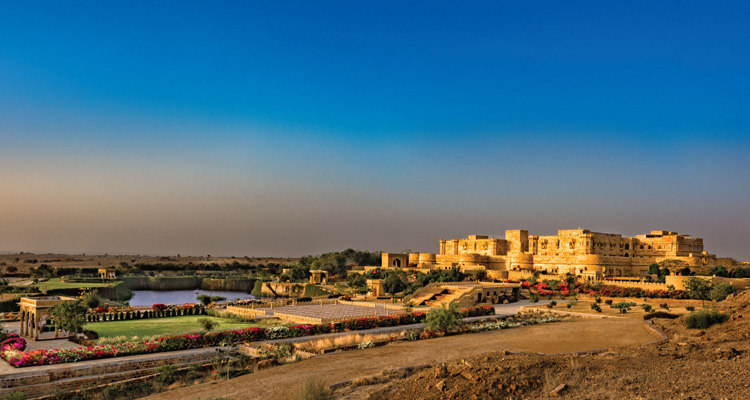
Two nights in Jaisalmer allow the Golden City to be understood beyond a brief fort visit. Jaisalmer Fort remains a living fortified settlement, while the elaborate merchant havelis of the lower city demonstrate the wealth generated through historic trade routes. Golden sandstone unifies the city's architectural appearance and gives Jaisalmer a visual identity unlike any other stop on the journey.
The route continues to Jodhpur, where Mehrangarh Fort dominates the Blue City from a rocky escarpment. Two nights provide sufficient time for the fort, Jaswant Thada and the historic market district without compressing the destination between long drives. From Marwar, the road then crosses the Aravallis through Ranakpur, where Jain marble architecture introduces another important strand of Rajasthan's heritage.
Udaipur and Chittorgarh form the Mewar section. Udaipur's City Palace and lake setting represent the later royal capital, while Chittorgarh preserves an older fortified landscape deeply connected with Mewar's political history. Visiting both makes it possible to understand historical continuity rather than seeing each fort or palace as an isolated attraction.
Pushkar adds a sacred dimension before the itinerary reaches Jaipur, the planned royal capital founded in the eighteenth century. Amber Fort, City Palace and Jantar Mantar illustrate the transition from hill fortress to organised urban centre. The final road towards Agra passes through Fatehpur Sikri, bringing Rajput and Mughal architectural traditions into direct sequence.
Agra provides the final monumental chapter through the Taj Mahal before the journey returns to Delhi. For travellers seeking a Rajasthan historical tour, these fifteen days provide a broad architectural timeline built around havelis, forts, temples, royal cities and major heritage sites rather than simply connecting Rajasthan's most photographed landmarks.
Arrive in Delhi and meet your representative or driver at the airport or confirmed arrival point. Transfer privately to the selected hotel and complete the check-in formalities. Delhi serves as the gateway to the Rajasthan circuit, but its own long history also creates an appropriate starting point for a journey centred on architecture and heritage.
Depending on the arrival schedule, spend the afternoon resting or take a gentle orientation through selected parts of the capital. Delhi has developed through multiple historical periods, and even a short drive reveals contrasts between older neighbourhoods, broad ceremonial avenues and contemporary metropolitan districts.
Rather than attempting to compress extensive Delhi sightseeing into an arrival day, the programme keeps the schedule flexible. Travellers arriving after an international flight can recover comfortably, while earlier arrivals can use the available hours to become familiar with the city.
The evening remains free for personal time at the hotel or a short local outing according to preference. The following morning begins the overland Rajasthan route, moving directly towards the painted heritage of Shekhawati.
Overnight stay in Delhi
Leave Delhi after breakfast and travel towards Nawalgarh, entering Rajasthan through the Shekhawati region. Instead of beginning with one of the state's major royal capitals, the itinerary opens with a smaller town whose historical importance is closely connected with merchants, trade and richly decorated private residences.
After arrival, check into the selected hotel or heritage property and begin exploring the town's historic quarters. Nawalgarh is particularly known for its painted havelis, many of which were commissioned by prosperous merchant families who expressed their status through elaborate façades, courtyards and wall paintings.
Observe the surviving frescoes closely. Traditional religious and mythological themes can appear beside decorative motifs and subjects reflecting changing technology, transport and social influences. This unusual combination makes Shekhawati's painted architecture an important visual record of a society responding to both tradition and wider commercial connections.
The residences themselves are equally significant. Ornamental doorways, internal courtyards, projecting balconies and carefully organised family spaces demonstrate the architectural sophistication of these merchant homes. Unlike Rajasthan's royal palaces, these buildings tell history through private wealth and commercial networks.
Spend the evening within Nawalgarh's quieter surroundings before returning to the hotel.
Overnight stay in Nawalgarh
After breakfast, leave Nawalgarh and travel towards Bikaner. The changing landscape begins to reveal the transition from Shekhawati towards Rajasthan's drier northwestern region. Bikaner's historical development was strongly influenced by its position within this demanding environment and by the political ambitions of its rulers.
On arrival, check into the hotel and later visit Junagarh Fort, the city's principal royal monument. Unlike many major Rajasthan fortresses constructed on elevated hills, Junagarh stands on relatively level terrain. Its strong walls and defensive gateways therefore create a different relationship between fortification and landscape.
Move through the fort's courtyards and palace sections, where the architecture becomes progressively more decorative. Royal chambers, balconies, ceremonial halls and detailed surfaces demonstrate how successive rulers expanded and embellished the complex over time.
The contrast between Junagarh's severe exterior and richly finished interior spaces makes it especially valuable on a historical itinerary. It shows that Rajasthan's forts cannot be understood through a single architectural formula; geography, political conditions and individual dynasties produced very different solutions.
If time permits, observe selected parts of Bikaner's traditional urban area before returning to the hotel.
Overnight stay in Bikaner
Leave Bikaner after breakfast and travel first towards Deshnok, home to the renowned Karni Mata Temple. The temple is one of Rajasthan's most distinctive religious sites and is associated with a long-established local tradition involving the numerous sacred rats that live within the complex.
Visitors should approach the temple with sensitivity to its religious significance. Footwear and other entry procedures must follow temple rules, while photography should respect current regulations and worshippers. The unusual nature of the site should not overshadow the fact that it remains an active place of devotion.
After the Deshnok visit, continue on the longer road journey towards Jaisalmer. The scenery becomes progressively more arid as the route extends westward. Sparse vegetation, open terrain and increasingly desert-influenced settlements provide a geographical introduction to the region surrounding the Golden City.
Arrive in Jaisalmer and check into the hotel for a two-night stay. The warm colour of the local sandstone becomes immediately noticeable, creating a remarkably consistent visual character across forts, havelis and ordinary buildings.
Keep the evening comparatively light after the long drive. A short orientation around the lower city may be possible, but the major heritage programme is reserved for the following day.
Overnight stay in Jaisalmer
Begin with Jaisalmer Fort, the enormous golden sandstone stronghold rising above the surrounding city. The fort is historically significant not only for its defensive architecture but also because residential and commercial life continues within its walls, distinguishing it from many other monumental forts across Rajasthan.
Enter through the fortified gateways and continue into the narrow lanes of the settlement. Houses, shops, religious buildings and historic structures occupy the interior, creating a living urban environment within the fortifications. The arrangement offers valuable insight into how a fortified settlement functioned as a community rather than merely as a royal military complex.
Visit the Jain temples within the fort area, where intricately carved stonework demonstrates another aspect of Jaisalmer's artistic heritage. These active religious spaces should be visited according to applicable rules concerning entry, photography, footwear and respectful conduct.
Later, descend into the lower city to see selected merchant havelis. Their elaborately carved façades, projecting balconies and detailed sandstone screens reflect the wealth accumulated through Jaisalmer's historic trading connections. The craftsmanship is particularly remarkable because the local stone is used to create extremely fine decorative surfaces.
Spend the later afternoon walking through selected historic streets and observing the architectural consistency of the Golden City. Return to the hotel after a day focused on Jaisalmer's fort, faith and merchant heritage.
Overnight stay in Jaisalmer
After breakfast, leave Jaisalmer and travel east towards Jodhpur. The road crosses western Rajasthan's dry landscape, connecting two cities whose identities are both strongly influenced by their historic kingdoms yet visually very different from one another.
Jaisalmer's golden sandstone gradually gives way to the landscape of Marwar as the journey approaches Jodhpur. On arrival, check into the selected hotel for a two-night stay, allowing the city to receive more than a brief overnight stop.
Later, head towards the historic district around Clock Tower and Sardar Market. The busy market lanes provide an introduction to everyday Jodhpur through spices, textiles, traditional shops and local commerce. Above the old neighbourhoods, the immense profile of Mehrangarh Fort dominates the skyline.
Use the outing to understand the relationship between the lower city and the fortress rather than attempting the full fort visit after a long transfer. Travellers interested in photography can also observe the changing light on Mehrangarh and the surrounding traditional buildings.
Return to the hotel for the evening. The principal architectural exploration of Jodhpur is reserved for the next morning.
Overnight stay in Jodhpur.
Begin the day at Mehrangarh Fort, rising dramatically from a rocky escarpment above Jodhpur. The fortress is among Rajasthan's most powerful architectural statements, with immense walls and successive gateways protecting the former royal complex of the Rathore rulers.
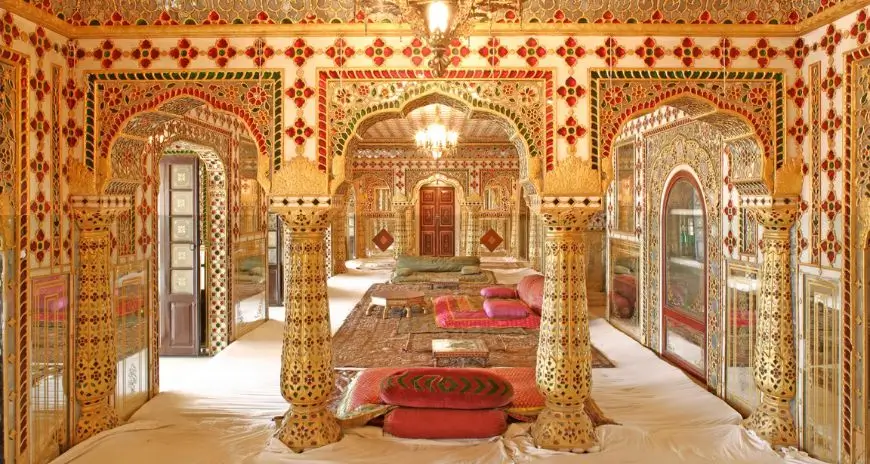
Inside, explore courtyards, galleries and former palace rooms where the architecture changes from military strength to remarkable decorative refinement. Carved stone screens, balconies, ornamental windows and ceremonial spaces demonstrate how the rulers created sophisticated courtly environments within a heavily defended stronghold.
From the elevated sections, look across Jodhpur's Blue City, where densely packed houses spread below the fort. The viewpoint is important historically as well as visually because it reveals how the settlement developed in relation to the fortress that protected and controlled it.
Continue to Jaswant Thada, the marble memorial located near Mehrangarh. Its pale stone, smaller scale and quieter setting provide a strong architectural contrast after the fort. Take time to appreciate the surrounding landscape before descending towards the city.
The later hours can be used for further exploration of traditional neighbourhoods or markets according to interest. Return to the hotel after completing the second day in Jodhpur.
Overnight stay in Jodhpur.
Leave Jodhpur after breakfast and travel towards the Aravalli region, where the landscape gradually becomes greener and more undulating. Today's route links Marwar with Mewar, but an important architectural stop at Ranakpur provides a distinctive transition between the two historic regions.
Visit Ranakpur Jain Temple, renowned for its intricate marble construction and extraordinary interior craftsmanship. Numerous carved pillars support richly worked ceilings and domes, producing a complex arrangement of architectural details and changing patterns of light.
Rather than viewing Ranakpur only as an ornamental monument, remember that it remains an active Jain religious site. Visitors should observe applicable regulations regarding dress, footwear, photography and permitted items, allowing worship and religious practice to take priority.
The temple introduces a form of Rajasthan heritage very different from the forts of Jaisalmer and Jodhpur. Where those sites communicate military authority and royal power, Ranakpur demonstrates religious patronage through detailed stone carving, spatial complexity and craftsmanship.
Continue afterwards towards Udaipur, travelling through the Aravalli landscape into the historic region of Mewar. On arrival, check into the selected hotel for a two-night stay. Keep the evening free or enjoy a gentle introduction to the lakefront, leaving the principal palace sightseeing for the following day.
Overnight stay in Udaipur.
Begin the morning at Udaipur City Palace, the monumental royal complex overlooking Lake Pichola. Developed over several generations of Mewar rulers, the palace contains interconnected courtyards, terraces, gateways, corridors and former royal chambers rather than following the design of a single uniform building. Its gradual expansion reflects the long political history of the Mewar dynasty and the development of Udaipur as its later capital.
Walk through the principal accessible areas while observing decorative stonework, balconies, ornamental windows and architectural details created during different periods. Elevated sections provide expansive views over Lake Pichola, the historic city and the surrounding Aravalli hills. These viewpoints demonstrate how carefully the palace was positioned in relation to the city's natural landscape.
Continue towards Jagdish Temple, located within walking distance of the palace in the old city. The temple remains an active religious site, and its prominent position above the surrounding streets makes it an important part of Udaipur's historic urban fabric. Visitors should observe the applicable customs concerning footwear and respectful behaviour.
Spend time afterwards walking through selected lanes of the old city. Traditional houses, small workshops, shops and historic buildings provide a closer look at Udaipur beyond its royal monuments. The narrow streets reveal a more intimate side of the city than can be appreciated from the main roads.
Later, visit Saheliyon Ki Bari, where landscaped gardens, fountains and pavilions provide a quieter architectural setting. Return to the hotel after completing the day's exploration of Mewar's lake capital.
Overnight stay in Udaipur.
After breakfast, leave Udaipur and travel towards Chittorgarh. The journey connects two cities central to the history of Mewar. Udaipur became the later capital, while Chittorgarh represents an earlier fortified centre whose history is closely associated with conflict, resistance and the political identity of the region.
On arrival, check into the selected hotel before beginning the exploration of Chittorgarh Fort. Spread across an extensive elevated plateau, the fort differs significantly from the more compact palace complexes encountered elsewhere. Its historical structures are distributed across a large fortified landscape containing gateways, palace remains, temples, towers and reservoirs.
Travel through the successive entrances and visit selected principal sites within the fort. The surviving structures provide evidence of different phases of construction and occupation, while the enormous scale of the fortified plateau demonstrates the strategic importance once attached to Chittorgarh.
Among the fort's most recognisable landmarks are its monumental towers and historic palace areas. Rather than viewing each structure in isolation, the visit is best understood as an exploration of an entire fortified settlement where royal, religious, military and everyday functions once existed within the same defensive boundary.
Spend sufficient time at the elevated viewpoints to appreciate the geography surrounding the fortress. After completing the visit, return to the hotel. Staying overnight in Chittorgarh allows this major historical destination to receive proper attention rather than being reduced to a hurried roadside stop.
Overnight stay in Chittorgarh.
Leave Chittorgarh after breakfast and travel towards Pushkar. After several days centred on forts, royal courts and military history, the character of the itinerary now changes towards one of Rajasthan's most important pilgrimage landscapes.
Arrive in Pushkar and check into the selected hotel. The town developed around Pushkar Lake, whose sacred ghats form the spiritual and geographical centre of the settlement. Unlike the monumental scale of Chittorgarh, Pushkar is best appreciated through its compact streets, temples and activity around the water.
Visit the lake and walk through selected ghat areas while respecting the religious practices taking place there. Worshippers may be performing rituals or prayers, and visitors should observe local rules regarding footwear, photography and behaviour close to the sacred water.
Continue to the Brahma Temple, one of the religious landmarks most closely associated with Pushkar. Temple access and darshan should follow the prevailing operating hours and local regulations. The importance of the site lies in its living religious tradition rather than simply its value as an architectural attraction.
Spend the later part of the day walking through Pushkar's market streets. Shops selling religious items, textiles and handicrafts occupy the compact lanes around the pilgrimage quarter. Return to the hotel after the visit and enjoy the quieter evening atmosphere of the town.
Overnight stay in Pushkar.
After breakfast, leave Pushkar and travel towards Jaipur. The comparatively short transfer connects the sacred atmosphere of Pushkar with Rajasthan's largest historic royal capital, where the next two nights are devoted to understanding both the older kingdom of Amber and the later planned Pink City.
On arrival in Jaipur, transfer to the hotel and complete check-in. After time to refresh, begin an introductory exploration of the historic walled city. Jaipur's broad market streets and organised urban layout immediately distinguish it from the narrower lanes and organically developed settlements visited earlier in the tour.
Spend time around Hawa Mahal, whose remarkable façade overlooks one of the old city's busiest streets. Its numerous small windows and projecting elements have made it a symbol of Jaipur, but the building is also important for understanding the relationship between royal architecture and the public streets of the planned capital.
Continue through selected sections of the traditional bazaars. Jaipur developed important commercial traditions associated with gemstones, jewellery, textiles and handicrafts, and many of these trades remain visible within the historic market districts. Walking or driving through these areas provides context for Jaipur as a functioning commercial city rather than simply a collection of royal monuments.
Return to the hotel after the introductory outing. Amber Fort, City Palace and Jantar Mantar are intentionally reserved for the following day, giving each major site sufficient time.
Overnight stay in Jaipur.
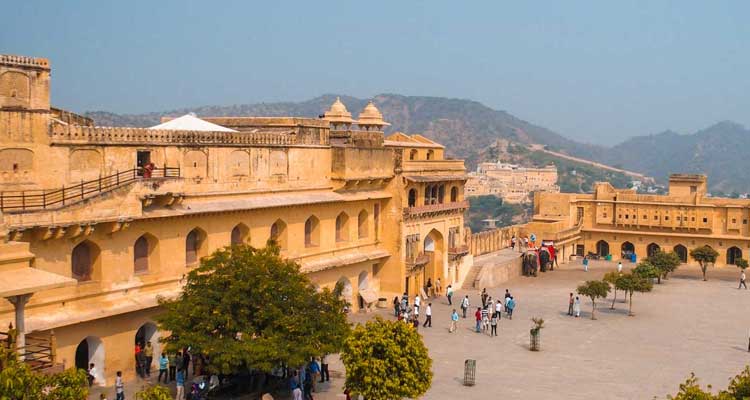
Begin with Amber Fort, situated among the hills outside central Jaipur. Before the construction of the planned Pink City, Amber served as the principal seat of the Kachwaha rulers. Its fortified position above Maota Lake demonstrates the strategic priorities of an earlier period in Rajasthan's royal history.
Enter through the main gateways and move across the fort's courtyards into its palace sections. Defensive walls and massive entrances gradually give way to decorated chambers, balconies and more refined royal spaces. The architectural progression shows how Amber combined the functions of military stronghold, ceremonial centre and royal residence.
After exploring the fort, return towards Jaipur and pause near Jal Mahal where stopping conditions permit. Continue to City Palace, located at the heart of the planned capital. Its courtyards and gateways represent a very different approach to royal architecture from the elevated fortress visited earlier in the morning.
Walk afterwards to Jantar Mantar, where large-scale astronomical instruments were designed for observation and calculation. The site demonstrates the scientific interests of Maharaja Sawai Jai Singh II and adds an important intellectual element to Jaipur's historical identity.
Complete the day with additional time in the old city according to personal interest. By visiting Amber and Jaipur together, travellers can clearly see the transition from an older fortified royal centre to a carefully planned capital designed around administration, commerce and court life.
Overnight stay in Jaipur.
Leave Jaipur after breakfast and begin the journey towards Agra, stopping en route at Fatehpur Sikri. This historical sequence is particularly appropriate near the end of the tour because the journey now moves from the Rajput architectural traditions of Rajasthan back into the monumental world of the Mughal Empire.
Fatehpur Sikri served as an imperial capital during the reign of Emperor Akbar. Built primarily in red sandstone, the extensive complex includes monumental gateways, courtyards, audience areas and former residential structures. Its architecture demonstrates a sophisticated combination of imperial planning and varied artistic influences.
Walk through the principal accessible sections while considering how the complex functioned as a royal and administrative centre. After two weeks of Rajasthan forts and palaces, visitors can compare Mughal spatial planning directly with the fortified and urban royal architecture seen in Jaisalmer, Jodhpur, Udaipur and Jaipur.
Continue afterwards towards Agra and check into the selected hotel. Depending on arrival time and the final sightseeing schedule, the evening can remain free so that the Taj Mahal can receive proper attention rather than being hurried at the end of a long transfer day.
Spend the final overnight of the tour in Agra, with the city's most celebrated monument reserved as the architectural finale of the journey.
Overnight stay in Agra.
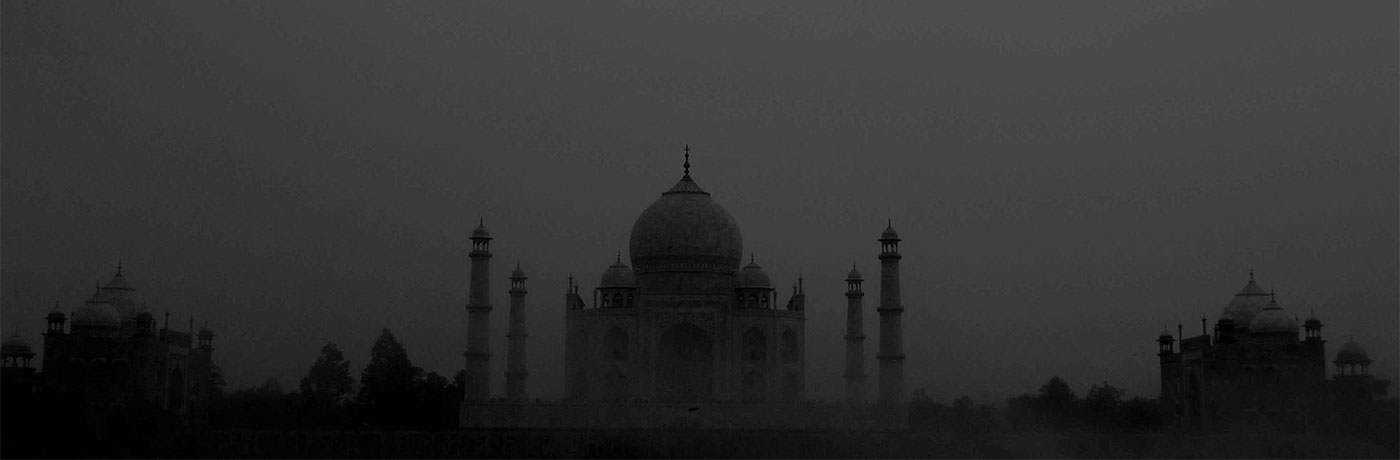
Begin the final day with a visit to the Taj Mahal, subject to its official opening schedule. The monument provides a striking conclusion to a tour that has examined architecture across Rajasthan and North India, from merchant havelis and Jain temples to enormous hill forts and royal palace complexes.
Enter through the monumental gateway and proceed towards the white marble mausoleum, positioned beyond its formal garden. The symmetry of the complex, relationship between architecture and landscape, and carefully controlled visual perspective demonstrate a very different design philosophy from the fortified structures that dominated much of the Rajasthan route.
Take time to examine the craftsmanship more closely. Marble inlay, calligraphic decoration, carved details and carefully balanced architectural proportions contribute to the Taj Mahal's significance beyond its familiar silhouette. Its riverfront position also reflects an important aspect of Mughal architectural planning.
After completing the visit, begin the drive towards Delhi. The return journey closes a historical route that began with the merchant heritage of Shekhawati and passed through the former kingdoms of Bikaner, Jaisalmer, Marwar and Mewar before reaching Jaipur and the Mughal centres of Fatehpur Sikri and Agra.
On arrival in Delhi, transfer to Delhi Airport, railway station, hotel or another confirmed onward location according to the travel arrangements. No additional Delhi overnight is added, as the scheduled route concludes with the return from Agra.
22 Nights / 23 Days
Delhi – Agra – Fatehpur Sikri – Jaipur – Pushkar – Jodhpur – Ranakpur – Udaipur – Cochin – Munnar – Thekkady (Periyar) – Kumarakom – Alleppey Houseboat – Kovalam – Kanyakumari – Trivandrum
03 Nights / 04 Days
Delhi - Jaipur - Ranthambore - Delhi
09 Nights / 10 Days
Delhi - Agra - Abhaneri - Jaipur - Varanasi - Delhi