Your Travel Partner
SINCE 1989
Your Travel Partner
SINCE 1989
Delhi – Mandawa – Bikaner – Jaisalmer – Khuri – Jodhpur
Rajasthan's desert region is not defined by sand dunes alone. Long before travellers began visiting the Thar for camel rides and sunset views, its towns were shaped by merchant trade, fortified kingdoms, caravan routes, limited water resources and communities that learned to build and prosper in an arid landscape. The Rajasthan Desert Tour Package 7 Days follows this broader story from Delhi through Mandawa, Bikaner and Jaisalmer before reaching the dunes of Khuri and finishing beneath the walls of Mehrangarh Fort in Jodhpur.
The route begins with Mandawa in the Shekhawati region, where the first major architectural encounters are merchant havelis rather than royal fortresses. Wealthy trading families commissioned residences decorated with frescoes, carved entrances and internal courtyards, leaving behind streets that still reflect the commercial history of northern Rajasthan. This provides an unusual opening to a desert itinerary because it introduces the economic connections that once linked Rajasthan's inland towns with wider trading networks.
From Shekhawati, the road moves west towards Bikaner. The environment becomes noticeably drier, and the journey begins to acquire the geographical character associated with the Thar region. Junagarh Fort provides Bikaner's defining royal landmark, combining formidable outer walls with elaborate palace sections hidden inside the fortified complex.
The journey then penetrates farther west towards Jaisalmer, where golden-yellow sandstone creates an architectural character unlike any previous destination. Two nights are allocated here so that Jaisalmer Fort, Jain temples, merchant havelis and historic streets can be explored before the itinerary moves beyond the city towards the dunes.
Jaisalmer's historical importance was closely connected with its position on old trade routes. The richly decorated havelis of prosperous merchants demonstrate that desert cities were not isolated settlements; they participated in networks of commerce that supported sophisticated architecture despite the demanding environment.
The desert component becomes more immersive when the journey reaches Khuri. Instead of treating the dunes as a hurried excursion from Jaisalmer, the itinerary includes an overnight stay near Khuri. The change from an inhabited historic city to a smaller desert settlement allows travellers to see another side of the Thar landscape.
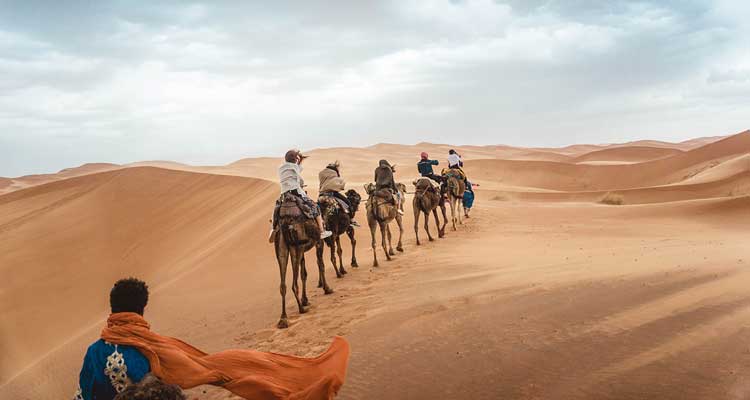
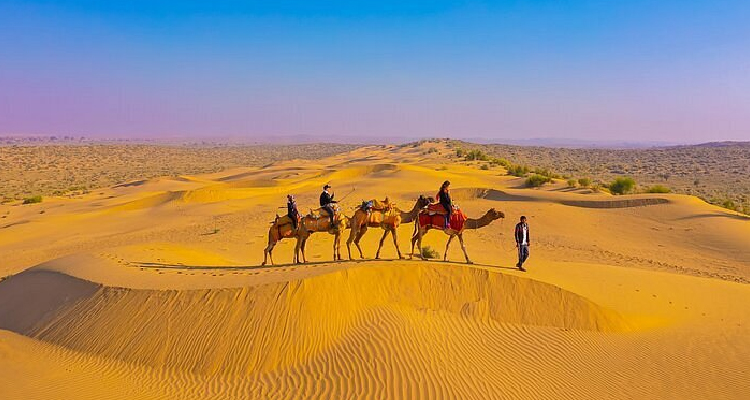
A camel safari in Khuri can provide a traditional way to move through selected dune areas and appreciate the scale and quietness of the surroundings. The activity should be arranged responsibly, with attention to animal welfare, weather conditions and the physical comfort of travellers. Those who prefer not to ride can enjoy the desert environment through alternative locally available arrangements.
The final stage reaches Jodhpur, where Mehrangarh Fort rises dramatically above the Blue City. The journey therefore ends with one of Rajasthan's strongest fort experiences, linking the desert landscapes of Jaisalmer and Khuri with the historic capital of Marwar.
For travellers looking specifically for a Rajasthan desert tour package, this seven-day route offers considerably more than a single dune excursion. Painted havelis, fortified cities, desert architecture, Jain temples, a Khuri overnight experience and Jodhpur's Marwar heritage combine to provide a broader understanding of western Rajasthan.
Meet the representative or private driver at the confirmed pickup location in Delhi and begin travelling towards Mandawa. Delhi serves as the starting point rather than an overnight destination in this itinerary, allowing the first night to be spent inside Rajasthan.
The road gradually leaves the dense metropolitan environment behind and moves towards the smaller towns and semi-arid landscapes of the Shekhawati region. This transition forms an important introduction to the journey because the landscape will continue becoming drier as the route proceeds towards Bikaner and Jaisalmer.
Arrive in Mandawa and check into the selected hotel or heritage property. After refreshing, begin exploring selected streets known for historic merchant havelis. Their decorated façades immediately distinguish Mandawa from Rajasthan's better-known royal capitals.
Observe the surviving frescoes, ornate entrances, balconies and internal courtyard arrangements where accessible. The havelis were commissioned by prosperous trading families, and their architecture reflects both private domestic life and the desire to display commercial success.
Spend the evening within Mandawa's quieter heritage surroundings. The overnight stay provides sufficient time to appreciate the town before continuing deeper into Rajasthan the following morning.
Overnight stay in Mandawa.
After breakfast, leave Mandawa and continue towards Bikaner. The surroundings become progressively more arid, providing the first substantial indication that the route is entering Rajasthan's desert belt.
On arrival, transfer to the selected hotel and complete check-in. Later, proceed to Junagarh Fort, a major royal complex whose relatively level-ground location differentiates it from the hilltop forts encountered elsewhere in Rajasthan.
Approach through the fortified gateways before entering the palace areas protected behind the outer walls. Courtyards, balconies, decorative rooms and ceremonial spaces reveal how Bikaner's rulers combined defensive requirements with increasingly elaborate royal architecture.
Spend time examining the contrast between the fort's imposing exterior and the more refined interiors. This transition helps demonstrate that Rajasthan's forts were not simply military installations; many functioned as complex royal residences and administrative centres.
After the visit, spend the remaining time exploring an appropriate local area or return to the hotel. Bikaner forms an important bridge between Shekhawati's merchant heritage and the deeper desert environment awaiting beyond the city.
Overnight stay in Bikaner.
Leave Bikaner after breakfast and begin the longer drive towards Jaisalmer. Rather than treating the road simply as a transfer, observe how the landscape changes as the journey moves deeper into western Rajasthan.
Vegetation becomes increasingly sparse, settlements are separated by greater distances and the surrounding terrain reveals the environmental conditions that have shaped life in the Thar. Historic communities depended on careful water management and trading connections to sustain themselves in this region.
As Jaisalmer approaches, golden sandstone begins to dominate the architecture. Jaisalmer Fort rises above the city and appears particularly striking against the desert surroundings, giving the destination its familiar Golden City identity.
Check into the selected hotel for a two-night stay. Keeping the first evening relaxed means the fort and historic city do not need to be rushed after the long road journey from Bikaner.
If arrival time permits, take a gentle walk through a nearby market or view the changing light on the sandstone city before returning to the hotel.
Overnight stay in Jaisalmer.
Begin with Jaisalmer Fort, one of Rajasthan's most distinctive fortified settlements. Unlike many forts functioning mainly as historical monuments, Jaisalmer continues to contain residences, shops, temples and everyday activity within its walls.
Walk through the narrow lanes and observe how golden sandstone has been used throughout the fort. Houses, religious structures, balconies and defensive architecture share a similar material palette, giving the historic settlement remarkable visual continuity.
Visit the Jain temples within the fort area according to current visitor timings. Their detailed stone carvings provide a strong contrast to the heavy defensive architecture surrounding them. Because these remain religious spaces, applicable rules regarding footwear, clothing, belongings and photography should be respected.
Continue into the lower city to see selected merchant havelis. Their richly carved sandstone façades provide evidence of the wealth generated through historic trade connections and reveal how merchants contributed to Jaisalmer's architectural identity alongside its rulers.
Spend the later afternoon exploring the old streets at an unhurried pace. The next day is dedicated to the move from Jaisalmer's urban desert heritage into the more open dune landscape around Khuri.
Overnight stay in Jaisalmer.
After breakfast, enjoy any remaining scheduled time in Jaisalmer before departing towards Khuri. The relatively shorter transfer changes the character of the journey from historic urban sightseeing to a more landscape-focused desert experience.
As the road leaves Jaisalmer behind, the surroundings become increasingly open. Smaller settlements and stretches of arid terrain offer a closer view of the environment that defines this part of Rajasthan.
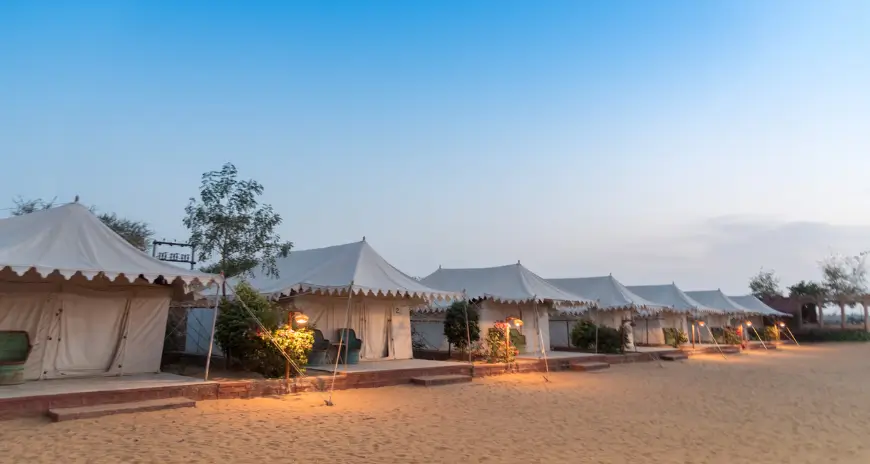
Arrive in the Khuri area and check into the confirmed desert camp or local accommodation. The exact style of stay should follow the selected package category, as facilities and accommodation standards can vary between properties.
Later, proceed for the scheduled camel safari in an appropriate dune area. The ride provides a slower way to experience the desert terrain and observe how the landscape changes as the light becomes softer towards evening. Camel activities should be undertaken only through responsible local operators and remain subject to weather and operational conditions.
Spend time around the dunes during the evening before returning to the accommodation. Any cultural programme or dinner arrangement should be considered included only when specifically stated in the confirmed booking.
Overnight stay in Khuri.
Wake in the desert surroundings and enjoy breakfast before leaving Khuri for Jodhpur. The road gradually moves away from the dune landscape and heads towards the historic heartland of Marwar.
During the journey, the contrast between the previous night's open desert environment and the approaching urban landscape becomes increasingly apparent. Jodhpur developed as an important fortified capital and provides an appropriate historical finish to a route centred on Rajasthan's western regions.
Arrive in Jodhpur and check into the selected hotel. Depending on the arrival time, begin with the old-city area around Clock Tower and Sardar Market. The bustling market environment immediately contrasts with the quiet desert surroundings of Khuri.
Walk through selected lanes where traditional shops sell spices, textiles, handicrafts and local goods. From various points around the historic centre, Mehrangarh Fort can be seen rising dramatically above the city.
Keep the main fortress visit for the following morning so that Mehrangarh can be explored without rushing before closing time. Return to the hotel after the evening orientation.
Overnight stay in Jodhpur.
Begin the final morning with Mehrangarh Fort, the defining monument of Jodhpur and one of the most imposing fortifications on the Rajasthan desert route. Its massive walls rise directly from a rocky escarpment overlooking the city.
Enter through the historic gateways and proceed into the accessible palace sections. Inside the formidable outer walls are courtyards, carved stone screens, balconies and former royal chambers that reveal the more refined side of Marwar's court culture.
From the elevated viewpoints, look across the densely built Blue City below. The panorama provides a memorable final perspective on the journey, contrasting Jodhpur's urban settlement with the open desert landscapes experienced around Jaisalmer and Khuri.
Continue to Jaswant Thada if the departure schedule allows. The marble memorial and its quieter surroundings provide a visually lighter counterpart to the enormous stone mass of Mehrangarh Fort.
After sightseeing, return to the hotel if required, complete check-out and transfer to Jodhpur Airport, railway station or another confirmed departure point. The route from Mandawa's painted havelis through Bikaner, Jaisalmer and Khuri to Jodhpur completes the scheduled Rajasthan Desert Tour Package 7 Days – Thar Desert, Camel Safari & Khuri Dunes.
06 Nights / 07 Days
Jodhpur – Osian – Jaisalmer – Sam Sand Dunes – Bikaner – Delhi
12 Nights / 13 Days
Delhi - Jaipur - Jodhpur - Jaisalmer - Udaipur - Delhi