Your Travel Partner
SINCE 1989
Your Travel Partner
SINCE 1989
Delhi – Agra – Fatehpur Sikri – Abhaneri – Jaipur – Pushkar – Jodhpur – Ranakpur – Udaipur – Delhi
Colour is not merely decorative in Rajasthan; it often belongs to the identity of an entire place. Jaipur carries its famous pink façades, Jodhpur spreads in shades of blue beneath Mehrangarh Fort, Pushkar is filled with temple flags and busy market lanes, while Udaipur's white palaces rise beside reflective lakes. The Colourful Rajasthan Tour 11 Days with Taj Mahal connects these contrasting destinations with Delhi and Agra, creating a route through some of northern India's strongest architectural, cultural and historical settings.
The journey begins in Delhi before moving to Agra for the Taj Mahal and Agra Fort. Rather than travelling directly into Rajasthan afterwards, the road to Jaipur includes two historically valuable stops. Fatehpur Sikri preserves the extraordinary former capital established by Emperor Akbar, while Abhaneri is known for Chand Baori, one of India's most remarkable historic stepwells. These places add substance to the travel day and show forms of architecture very different from the palaces and forts encountered later in Rajasthan.
Two nights in Jaipur provide enough time for Amber Fort, City Palace, Jantar Mantar, Hawa Mahal and the old bazaars without compressing the Pink City into a hurried stop. The route then leaves the large royal capitals temporarily for Pushkar, where the sacred lake, ghats and temples create a more spiritual atmosphere. Jodhpur brings the scale and strength of Mehrangarh Fort into the journey before the road turns south through the Aravalli region towards Ranakpur and Udaipur.
The final Rajasthan section centres on Udaipur, where Mewar's royal heritage developed against a landscape of lakes and hills. City Palace, old temples, traditional streets and waterfront views provide a graceful change from the desert-edge architecture of Jodhpur. Designed as a Rajasthan heritage tour with Taj Mahal, this itinerary is well suited to travellers who want India's celebrated monuments alongside old cities, pilgrimage traditions, stepwell architecture, hill forts, Jain craftsmanship and the everyday character of Rajasthan's historic streets.
Land in Delhi, where assistance will be provided for your transfer from the airport to the hotel. India's capital is a fitting place to begin this journey because several periods of the country's history remain visible within the same metropolitan area. Medieval monuments, Mughal neighbourhoods, colonial avenues and contemporary districts coexist across a city that has repeatedly served as a centre of political power. Complete the hotel formalities and take some time to recover from your flight before beginning the local programme according to your arrival schedule.
When arrival time permits, the first afternoon can provide a gentle introduction to Delhi rather than a demanding sequence of monument visits. Drive through sections of New Delhi, where broad roads and government buildings present a very different cityscape from the dense quarters of Old Delhi. The surroundings of India Gate, the ceremonial avenues and the principal government district help establish the modern political importance of the capital while retaining the architectural character created during the early twentieth century.
The remainder of the day is intentionally flexible because travellers may be arriving after long international journeys. Time at the hotel allows the group to adjust before beginning the road journey towards Agra the next morning. Those with sufficient energy can observe the nearby streets or enjoy a relaxed evening, while travellers preferring rest can prepare for the active days ahead. Delhi serves here as the gateway to a route that will soon move through Mughal cities and deep into Rajasthan's former princely kingdoms.
Overnight stay in Delhi.
Begin early with breakfast followed by a carefully planned introduction to Delhi's historic landmarks. Depending on the final sightseeing schedule, the morning can cover significant sites associated with the city's Mughal and earlier periods, along with prominent landmarks of New Delhi. Delhi is not defined by one old centre; successive rulers established different settlements here, leaving forts, tombs, mosques, gateways and planned districts across a wide geographical area. This layered history makes even a selective sightseeing programme valuable before travelling onwards.
The route through the capital may include important landmarks such as India Gate, the government district, Humayun's Tomb or Qutub Minar, according to the confirmed local programme. Humayun's Tomb is particularly relevant before travelling to Agra because its garden layout and architectural principles belong to the development of Mughal funerary architecture that later reached its most celebrated expression at the Taj Mahal. Qutub Minar and its surrounding complex represent a much earlier period and show just how far Delhi's architectural history extends.
After completing the scheduled visits, leave Delhi and drive towards Agra. The transition from the national capital to the former Mughal imperial centre introduces the next major historical theme of the tour. Arrive in Agra, transfer to the hotel and settle in for the evening. Keeping the principal Agra monuments for the following morning allows them to be visited with sufficient time rather than squeezed into the end of a road journey.
Overnight stay in Agra.
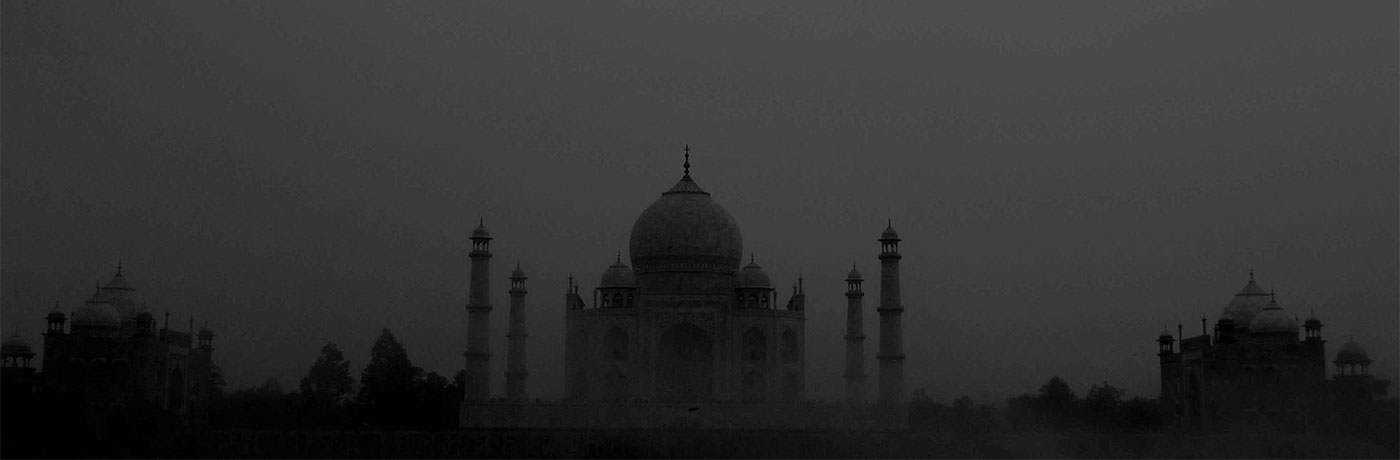
The morning is devoted to the monument that has made Agra internationally famous: the Taj Mahal. Commissioned by Mughal Emperor Shah Jahan in memory of Mumtaz Mahal, the mausoleum is celebrated not only for its white marble but also for the precision of its proportions, stone inlay, calligraphy, garden design and carefully planned symmetry. Passing through the monumental gateway provides the classic first view of the Taj aligned beyond the formal garden, but a closer visit reveals craftsmanship that is easily missed from a distance.
Spend adequate time walking around the main platform and observing the changing appearance of the marble under natural light. Decorative floral motifs, pietra dura work and Quranic calligraphy form an integral part of the monument's visual language. The Yamuna River runs behind the complex, while the mosque and corresponding building on either side contribute to its balanced layout. Visiting the Taj Mahal within the wider context of Mughal Agra makes it more than an isolated landmark and provides a foundation for understanding the imperial sites visited during the remainder of the day.
Continue to Agra Fort, whose imposing red sandstone walls contain a sequence of royal buildings developed under different Mughal emperors. The complex functioned as a fortified royal residence as well as a centre of imperial administration. Palace areas, courtyards and audience spaces reveal how the Mughal court operated, while the fort's connection with Shah Jahan adds another dimension to the morning's Taj Mahal visit. After completing the sightseeing programme, return to the hotel or spend the remaining hours according to the local schedule.
Overnight stay in Agra.
Check out after breakfast and begin one of the most historically varied road journeys of the itinerary. The first major stop is Fatehpur Sikri, established by Emperor Akbar as a Mughal capital during the sixteenth century. Although its period as an imperial centre was comparatively brief, the surviving buildings form an extraordinary architectural ensemble. Red sandstone palaces, audience halls, courtyards and religious buildings remain arranged within a planned complex that reflects the ambitions of Akbar's court.
Continue through important areas of Fatehpur Sikri, where structures such as Panch Mahal and the royal audience spaces display a mixture of architectural influences. The scale of the complex makes it possible to imagine the settlement as a functioning capital rather than simply a palace. After the visit, resume the road journey towards Rajasthan and make another worthwhile stop at Abhaneri, a village associated with one of the country's finest surviving stepwells. This detour introduces a completely different form of historic architecture.
At Abhaneri, see Chand Baori, whose immense geometric arrangement of descending steps was created to provide access to water in a region where seasonal conditions made water management essential. The visual symmetry of the stepwell is striking, but its practical purpose is equally important to understanding its significance. Continue from Abhaneri towards Jaipur and reach the Rajasthan capital later in the day. Check in at the hotel and relax after a journey that has linked Mughal imperial architecture with traditional Rajasthani water engineering.
Overnight stay in Jaipur.
Set out after breakfast for Amber Fort, positioned among the rugged hills beyond Jaipur's old city. Amber served as the principal seat of the Kachwaha rulers before the foundation of Jaipur, and the fort-palace grew over generations. Its defensive position and massive walls are immediately impressive, yet the inner courtyards and palace areas reveal an equally sophisticated world of decorated halls, gateways, private chambers and elevated terraces overlooking the surrounding landscape.
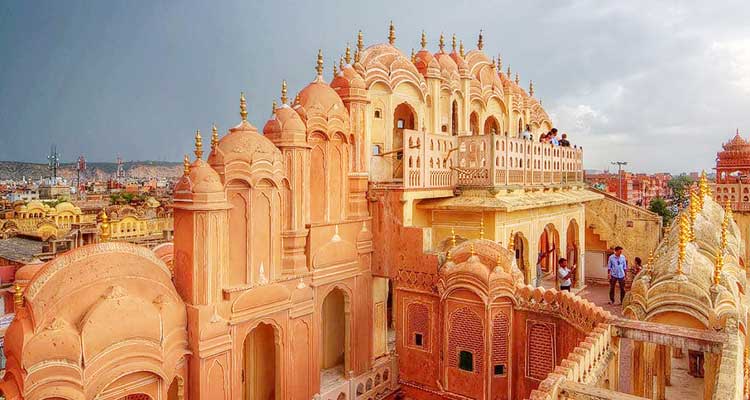
Return towards Jaipur and pause at Hawa Mahal, whose distinctive multi-windowed façade was designed as part of the royal city architecture. Proceed to City Palace, where courtyards, gateways and museum areas remain closely associated with Jaipur's ruling dynasty. Nearby stands Jantar Mantar, the remarkable astronomical observatory commissioned by Sawai Jai Singh II. Its enormous masonry instruments demonstrate the ruler's interest in astronomy and mathematical observation and provide one of Jaipur's most unusual heritage experiences.
Later, spend time within Jaipur's old commercial quarters. The planned city was organised around broad market streets that continue to specialise in jewellery, textiles, handicrafts and traditional products. Walking or driving through these areas provides a clearer impression of why Jaipur's heritage extends beyond its forts and palaces. Historic façades, workshops and busy bazaars remain part of daily urban life rather than functioning solely for visitors. Return to the hotel after a full day in the Pink City of Rajasthan.
Overnight stay in Jaipur.
After breakfast, leave Jaipur's busy avenues behind and travel towards Pushkar. The shift in atmosphere is immediate on reaching the town. Instead of monumental palace complexes and broad planned streets, Pushkar is centred around a sacred lake surrounded by ghats, temples, narrow lanes and small market areas. The destination has been associated with Hindu pilgrimage for centuries and remains one of Rajasthan's most spiritually significant towns.
After checking in, proceed towards Pushkar Lake, where numerous ghats descend to the water. Religious ceremonies and personal worship form part of everyday activity around the lake, so visitors should observe local customs and maintain respectful behaviour in the sacred areas. Walk through the surrounding lanes towards the Brahma Temple, the town's best-known temple and a site closely associated with Pushkar's religious identity. The experience is very different from formal monument sightseeing because the sacred quarter remains actively used by pilgrims.
Later, spend time in the old bazaar, where compact streets contain shops selling textiles, handicrafts, jewellery, clothing and religious items. Pushkar's smaller scale encourages slower movement and provides a welcome change after the large heritage cities earlier in the journey. Towards evening, the ghats and lake surroundings become quieter, with the hills forming a natural backdrop around the town. The overnight stay allows Pushkar to be appreciated beyond a short daytime excursion.
Overnight stay in Pushkar.
Depart Pushkar after breakfast for the journey to Jodhpur, travelling west into the historic region of Marwar. The scenery gradually becomes drier, and the architecture and landscape begin to reflect Rajasthan's transition towards the Thar Desert. Jodhpur was founded as the capital of a powerful Rajput kingdom, and the city's history is inseparable from Mehrangarh Fort, whose walls rise dramatically from a rocky hill above the old quarters.
Reach Jodhpur and transfer to the hotel. After time to refresh, head towards the historic centre for a first encounter with the Blue City. From elevated positions around Mehrangarh, clusters of blue-painted houses spread across the old neighbourhoods. Although the origin and extent of the blue colouring have changed over time, it remains one of the city's defining visual characteristics and distinguishes Jodhpur sharply from the pink façades of Jaipur and golden sandstone of other western Rajasthan settlements.
Spend the later hours around the Clock Tower and Sardar Market, where the commercial life of old Jodhpur is concentrated. Spice shops, textile merchants, handicraft stores and everyday market stalls fill the streets around the historic tower. This introduction focuses on the living city rather than immediately covering its major monuments, leaving Mehrangarh and other formal sightseeing for the following day. Return to the hotel after seeing Jodhpur at street level.
Overnight stay in Jodhpur.
Dedicate the morning to Mehrangarh Fort, a structure whose scale reflects the military and political importance once held by the rulers of Marwar. The ascent passes through formidable gates before reaching inner courtyards surrounded by palace buildings. From outside, Mehrangarh appears severe and defensive; inside, richly ornamented chambers, carved windows and elegant balconies reveal the refined court culture that existed behind the fortress walls.
Walk through the preserved palace areas and museum sections, where collections connected with the Rathore rulers provide context for Jodhpur's royal history. From the ramparts, look down across the blue houses and dense streets of the old city, with the broader landscape stretching beyond. These viewpoints make the relationship between the fort and the settlement below particularly clear. Mehrangarh's commanding position was not simply aesthetic; it allowed the rulers to oversee and defend their capital from a naturally strong location.
Continue to nearby Jaswant Thada, a graceful marble memorial set against the rocky terrain below the fort. Its lighter architecture creates a striking contrast with Mehrangarh's huge sandstone walls. Later, return towards Jodhpur's historic neighbourhoods, where old residences, bazaars and winding lanes provide another perspective on the city. The second night in Jodhpur ensures that the destination receives sufficient time rather than being treated as a brief stop between Pushkar and Udaipur.
Overnight stay in Jodhpur.
Leave Jodhpur after breakfast and travel south towards Ranakpur, with the landscape changing as the route approaches the Aravalli hills. This road sector is among the most scenic transitions of the itinerary because the dry plains around Jodhpur gradually give way to more varied terrain. Ranakpur lies in a peaceful valley and is renowned for a Jain temple complex that ranks among Rajasthan's finest examples of marble religious architecture.
Enter the principal Ranakpur Jain Temple and spend time observing its extraordinary interior. Numerous carved pillars support a complex arrangement of domes and halls, while detailed stonework covers surfaces throughout the building. The effect is very different from the fort architecture of Jodhpur: instead of massive defensive walls, Ranakpur relies on intricacy, symmetry and craftsmanship. Religious practices continue at the site, and visitors are required to follow the applicable temple rules during their visit.
Resume the journey through the Aravalli region towards Udaipur. Founded as the capital of Mewar, the city developed around a system of lakes and is surrounded by hills, giving it a noticeably different environment from Rajasthan's desert-side cities. Arrive at the hotel, complete check-in and enjoy the remainder of the evening at a relaxed pace. The change from Jodhpur's rugged fort landscape to Udaipur's lakes and hills marks one of the most attractive transitions on the entire route.
Overnight stay in Udaipur.
Begin with City Palace, the great royal complex overlooking Lake Pichola. Constructed and expanded by successive rulers of Mewar, the palace developed into a collection of interconnected courtyards, chambers, balconies and terraces rather than a single uniform building. Its position above the lake creates impressive views across the water and old city, while interior sections preserve decorative traditions associated with one of Rajasthan's most historically significant royal houses.
Walk from the palace area towards Jagdish Temple, an active place of worship in Udaipur's old quarter. The surrounding streets retain a close-grained urban character, with small shops, traditional houses and lanes descending towards the waterfront. Continue later to Saheliyon Ki Bari, a historic garden created with fountains, pavilions and landscaped spaces. Together, these sites show several sides of Udaipur, moving from royal architecture and religious heritage to a quieter garden environment.
Use the later part of the day to appreciate the city's relationship with its lakes. Waterfront areas offer views towards palaces, ghats and hills, particularly as daylight begins to soften. Udaipur's charm comes from the way monumental architecture is integrated into the surrounding landscape rather than standing separately from it. After spending the day among the heritage sites and older quarters of the City of Lakes, return to the hotel for the second night.
Overnight stay in Udaipur.
After breakfast, leave Udaipur for the scheduled journey back to Delhi. The morning brings the Rajasthan portion of the route to a close after travelling through several regions with markedly different identities. Jaipur presented the planned architecture of a royal capital, Pushkar introduced an active pilgrimage landscape, Jodhpur represented the fortified traditions of Marwar, and Udaipur brought the palaces and lakes associated with Mewar.
The return sector provides time to reflect on the architectural progression of the journey. Delhi and Agra established the Mughal background at the beginning, while Fatehpur Sikri and Abhaneri introduced two very different historic sites between Agra and Rajasthan. The journey then moved through Rajput capitals, sacred spaces and the Aravalli landscape. Each destination has contributed something distinct rather than simply repeating a standard sequence of forts and palaces.
Proceed to Delhi according to the transport arrangements confirmed for the tour. On reaching the capital, transfer to the designated hotel, airport or onward connection as specified in the final booking schedule. The route closes after linking the Taj Mahal with Rajasthan's Pink City, Pushkar's sacred lake, the Blue City of Jodhpur, Ranakpur's marble craftsmanship and Udaipur's historic waterfront in one continuous northern India journey.
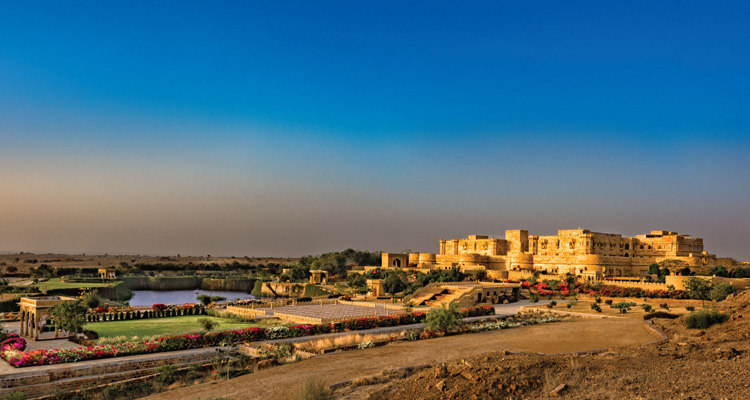
14 Nights / 15 Days
Delhi – Nawalgarh – Bikaner – Deshnok – Jaisalmer – Jodhpur – Ranakpur – Udaipur – Chittorgarh – Pushkar – Jaipur – Fatehpur Sikri – Agra – Delhi
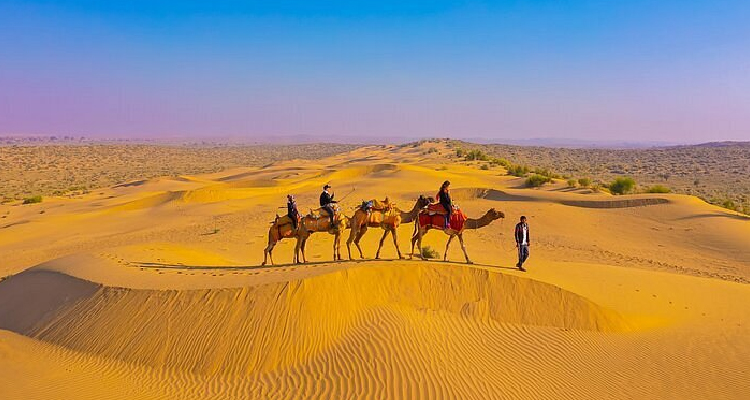
06 Nights / 07 Days
Jodhpur – Osian – Jaisalmer – Sam Sand Dunes – Bikaner – Delhi