Your Travel Partner
SINCE 1989
Your Travel Partner
SINCE 1989
Delhi – Mandawa – Bikaner – Jaisalmer – Sam Sand Dunes – Jodhpur – Mount Abu – Ranakpur – Udaipur – Chittorgarh – Bundi – Ranthambore – Jaipur – Agra – Delhi
Twenty-one days allow Rajasthan to be understood as a collection of distinct regions rather than a handful of famous cities. The Exotic Rajasthan Tour 21 Days – Complete Rajasthan with Taj Mahal follows a wide overland circuit through merchant towns, desert kingdoms, hill country, temple settlements, former princely capitals and wildlife territory. Delhi provides the starting point, but Rajasthan soon becomes the centre of the journey as the route enters Shekhawati through Mandawa and continues west towards Bikaner, Jaisalmer and the Thar Desert.
The northern and western stages reveal how communities adapted to Rajasthan's dry geography. Mandawa is characterised by painted merchant havelis rather than enormous royal palaces, while Bikaner's history is represented by the powerful Junagarh Fort and its desert-city neighbourhoods. Farther west, Jaisalmer rises from the arid landscape in yellow sandstone. Its living fort, Jain temples and merchant mansions recall a period when long-distance trade brought considerable wealth to this remote desert settlement. An overnight stay at Sam Sand Dunes then takes the journey beyond urban heritage and into the open Thar.
After the desert, the itinerary develops another character in Jodhpur and southern Rajasthan. Mehrangarh Fort represents the power of Marwar before the road climbs towards Mount Abu, Rajasthan's principal hill station. Ranakpur introduces extraordinary Jain craftsmanship, while Udaipur brings the lakes and palace architecture of Mewar into the journey. Chittorgarh, Bundi and Ranthambore continue the historical progression through a massive hill fort, a smaller former princely town and one of India's most recognised tiger reserves.
Jaipur and Agra form the final major heritage section. By the time travellers reach the Pink City, they have already seen several architectural traditions across Rajasthan, making Jaipur's planned streets and royal complexes easier to appreciate within a broader regional context. Agra then shifts the focus from Rajput history to the Mughal period, culminating at the Taj Mahal.
This extended 21-day Rajasthan tour is intended for travellers who prefer depth over speed. Two-night stays are used at several important destinations, while smaller places such as Ranakpur and Bundi receive their own overnight stops rather than being reduced to quick roadside visits. Desert landscapes, hill stations, Jain temples, painted havelis, tiger country, forts, palaces and old bazaars are woven into one continuous route, creating a fuller picture of Rajasthan than a conventional one-week circuit can provide.
Arrive in Delhi and meet the representative for assistance with your transfer to the hotel. The capital provides a useful starting point for a journey that will eventually cross much of Rajasthan because its own history connects closely with many of the kingdoms and empires encountered later. Delhi has served as a seat of power under numerous rulers, leaving an urban landscape where medieval monuments, Mughal remains, colonial planning and contemporary development stand within the same metropolitan area.
After reaching the hotel, complete check-in and allow sufficient time to rest. A twenty-one-day itinerary is deliberately paced differently from a short Rajasthan holiday, so there is no benefit in filling the international arrival day with excessive sightseeing. Depending on your flight schedule, a brief orientation through nearby parts of the capital may be possible, but the priority is to recover comfortably from the journey and prepare for the road travel beginning the next morning.
The evening is free for relaxation and provides an opportunity to become accustomed to the local surroundings. From Delhi, the route will gradually move away from the metropolitan environment and enter Rajasthan through Shekhawati before continuing towards the desert. That progression is important to the itinerary because the landscape, architecture and character of the destinations change naturally rather than appearing as disconnected sightseeing stops.
Overnight stay in Delhi
After breakfast, leave Delhi and travel towards Mandawa, entering the Shekhawati region of northern Rajasthan. As the journey progresses, large urban development gradually gives way to smaller towns and rural surroundings. Shekhawati earned prominence through merchant communities whose commercial success financed impressive private residences. Unlike Jaipur, Jodhpur or Udaipur, where royal architecture dominates the visitor experience, the most characteristic buildings here are the richly decorated havelis created by prosperous trading families.
Reach Mandawa and check into the hotel before heading into the historic town. The old streets contain numerous painted havelis, with façades, courtyards, balconies and walls carrying elaborate fresco work. Some paintings follow religious and mythological subjects, while others reflect changing social fashions and outside influences that reached merchant families through trade. Looking closely at these details turns a walk through Mandawa into a visual record of how wealth and cultural exchange influenced domestic architecture.
Later, continue through the quieter lanes and see how the historic mansions fit within the present-day town. The appeal of Mandawa lies less in one monumental attraction than in the concentration of heritage buildings across its older quarters. This makes walking especially rewarding, as carved doorways and faded paintings frequently appear along ordinary streets. With two nights scheduled here, there is no need to rush the first visit after the drive from Delhi.
Overnight stay in Mandawa
Begin the morning with further exploration of Mandawa and the surrounding Shekhawati heritage. The second day in the region provides time to look beyond a few famous façades and understand why these towns became associated with painted architecture. Merchant families who established successful businesses elsewhere often maintained strong connections with their ancestral towns, investing considerable wealth in elaborate residences that communicated prosperity and social standing.
Visit selected havelis and heritage areas where painted surfaces, enclosed courtyards and decorative architectural features remain visible. Frescoes may depict deities, animals, floral motifs, royal scenes and subjects influenced by technological and social changes. The variety makes Shekhawati particularly interesting because its artwork was not produced according to one rigid decorative programme. Different patrons and periods contributed to a constantly evolving visual language across the region.
The afternoon allows a more relaxed look at local streets and nearby heritage surroundings. Small markets, residential areas and old commercial buildings help place the grander havelis within their everyday setting. The additional night in Mandawa also reduces the constant packing and driving that can make longer Rajasthan tours tiring. Instead, travellers have time to absorb a region frequently crossed too quickly on routes between Delhi and Bikaner.
Overnight stay in Mandawa
Leave Mandawa after breakfast and continue west towards Bikaner. The landscape becomes increasingly dry as the journey approaches Rajasthan's desert belt, and the architectural focus shifts from merchant residences to the legacy of a former princely kingdom. Bikaner's rulers established a powerful state in a demanding environment, benefiting from strategic connections with trade routes that crossed northern Rajasthan.
After arrival and hotel check-in, proceed to Junagarh Fort, the city's principal historical monument. The fort differs from many of Rajasthan's best-known strongholds because it was built on relatively level ground instead of a dramatic hilltop. Strong walls and gateways protect an extensive group of royal structures within. Once inside, the military impression of the exterior gives way to ornate courtyards, halls and palace rooms created and altered by successive generations of Bikaner's rulers.
Spend time examining the decorative interiors, which display a mixture of carved stone, painted surfaces and detailed ornamental work. Afterwards, if the schedule allows, continue into Bikaner's older neighbourhoods to see traditional buildings and market streets. The city has its own architectural personality and should not be treated simply as a stop between Mandawa and Jaisalmer. Its combination of royal heritage and desert trading history establishes an important stage before the journey moves farther west.
Overnight stay in Bikaner
Following breakfast, begin the substantial drive from Bikaner to Jaisalmer. This is one of the road sectors where the geography becomes as important as the destination. Vegetation grows sparse, settlements become more widely separated and the horizon opens across the desert region. Travelling overland makes the remoteness of western Rajasthan much easier to understand and provides context for the fortified cities that developed around precious water sources and important caravan routes.
The journey crosses a landscape shaped by arid conditions but far from empty. Villages, grazing animals and hardy vegetation appear along the route, demonstrating how communities have adapted to the environment over generations. Historically, movement across this terrain connected Rajasthan with long-distance trading networks, and Jaisalmer benefited substantially from commerce passing through the region. Its merchant families invested their wealth in the richly carved buildings that remain among the city's defining features.
Arrive in Jaisalmer and transfer to the hotel. The warm colour of local sandstone immediately separates the city visually from Bikaner and Shekhawati. Depending on arrival time, take a short introductory walk through nearby streets or simply rest after the long drive. With two nights allocated to Jaisalmer, the fort, temples and havelis can be visited properly the following day without forcing major sightseeing into the evening.
Overnight stay in Jaisalmer
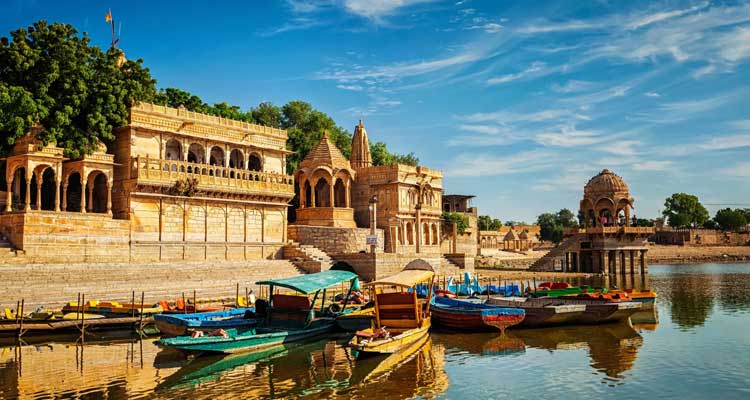
After breakfast, make your way towards Jaisalmer Fort, the immense sandstone citadel rising above the city. The fort is particularly unusual because it remains inhabited, with residential buildings, shops, temples and narrow lanes continuing within its walls. Entering through the fortified gateways therefore leads not into an empty archaeological complex but into a historic urban environment that has evolved while retaining much of its traditional architectural character.
Continue on foot through the fort's inner lanes and visit its important Jain temples, where detailed stone carving covers pillars, ceilings and sacred interiors. Small squares, elevated viewpoints and old residences appear throughout the settlement, providing glimpses over the lower city and towards the surrounding desert. The close arrangement of buildings also demonstrates how limited fortified space influenced the urban form of historic Jaisalmer.
Later, descend into the lower city to see prominent merchant havelis, including examples associated with the wealthy trading families who helped shape Jaisalmer's architectural reputation. Finely carved façades, stone screens and projecting balconies show the extraordinary decorative possibilities achieved with local sandstone. Spend the later hours among the old streets and market areas, where the golden stone continues to dominate the visual character of the city.
Overnight stay in Jaisalmer
The morning begins at a slower pace before leaving Jaisalmer for Sam Sand Dunes. After several days spent studying buildings, forts and merchant history, this stage turns attention towards the landscape that influenced the development of Rajasthan's western cities. The road moves away from dense urban surroundings into open desert country, where low vegetation and wide horizons replace sandstone streets and crowded market areas.
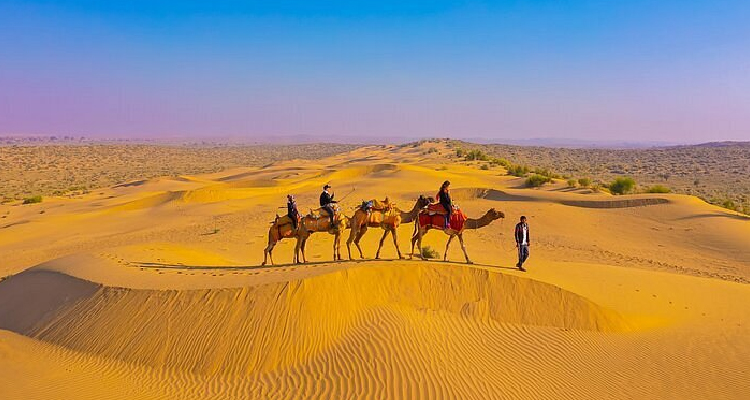
During the later afternoon, join a scheduled camel safari across the dune landscape. The slower movement of the camel allows time to observe changes in the surface of the sand, patterns created by wind and the scale of the surrounding open terrain. As sunset approaches, the light becomes softer and the dunes develop deeper shadows, producing one of the characteristic desert scenes associated with western Rajasthan.
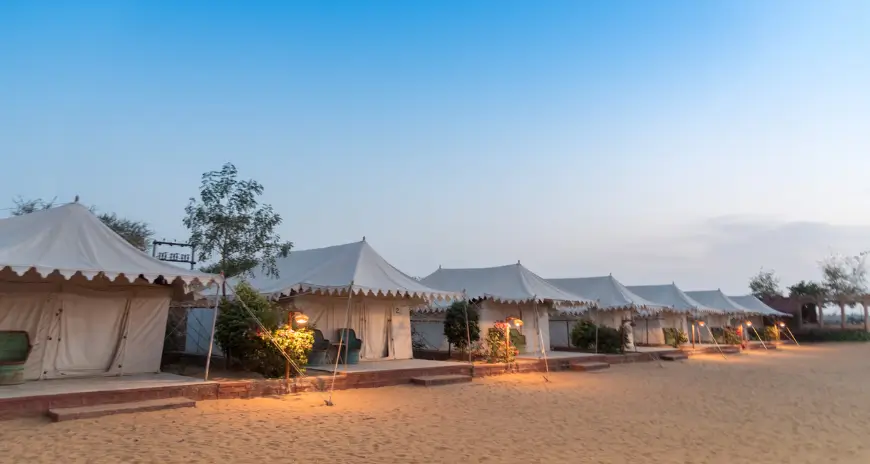
Proceed afterwards to the desert camp for the overnight stay. The evening atmosphere is markedly different from Jaisalmer, particularly once darkness settles across the open surroundings away from city streets. Dinner and the scheduled camp programme are enjoyed according to the confirmed arrangements. Spending the night near the dunes gives the desert section greater meaning than a short sunset excursion followed by an immediate return to town.
Overnight stay at Sam Sand Dunes
Wake in the desert surroundings and have breakfast before leaving Sam Sand Dunes for Jodhpur. The road turns east towards the historic heart of Marwar, moving from the open Thar landscape to a city dominated by one of India's most formidable forts. This change introduces a new stage of the itinerary: Jaisalmer's merchant and caravan history gives way to the political and military legacy of the Rathore rulers.
Reach Jodhpur and transfer to the hotel. After time to refresh, take an introductory outing through the older part of the city rather than attempting the entire sightseeing programme immediately after the drive. The neighbourhoods beneath Mehrangarh Fort are closely packed with traditional houses, narrow lanes and market activity, while many buildings carry the blue tones responsible for Jodhpur's familiar description as the Blue City.
Spend the evening around the Clock Tower and Sardar Market area, where spice sellers, textile shops, handicraft merchants and local businesses create one of Jodhpur's liveliest street environments. Above the old quarters, Mehrangarh remains visible as a constant presence and sets the scene for the detailed fort visit planned for the following day. The first of two nights in Jodhpur allows the city to be approached gradually after the long journey from the desert.
Overnight stay in Jodhpur
Begin the morning with a detailed visit to Mehrangarh Fort, the monumental stronghold that rises directly from a rocky hill above Jodhpur. The fort's massive walls dominate the skyline and immediately convey the military strength once commanded by the rulers of Marwar. Enter through its fortified gateways and continue towards the inner courtyards, where the architecture changes from imposing defensive structures to intricately decorated royal spaces. The contrast between the rugged exterior and refined palace interiors is one of Mehrangarh's most memorable characteristics.
Spend sufficient time inside the palace sections and museum galleries, where collections and preserved rooms provide a deeper understanding of Jodhpur's royal history. Carved balconies, lattice windows, painted surfaces and ceremonial chambers reveal the craftsmanship associated with the Rathore court. From elevated viewpoints along the fort, the old city spreads below in a dense collection of blue-toned houses, while the surrounding plains stretch towards the horizon. These views make the fort's strategic position particularly clear and explain why Mehrangarh became such a powerful symbol of Marwar.
Continue afterwards to Jaswant Thada, the elegant marble memorial situated near the fort. Its lighter proportions and peaceful setting provide a visual contrast with Mehrangarh's immense sandstone walls. Later, return towards the old-city neighbourhoods and traditional markets, where local shops, residential lanes and historic buildings create a more intimate impression of Jodhpur. The second night gives the city enough time to reveal both its royal architecture and its everyday character.
Overnight stay in Jodhpur
After breakfast, leave Jodhpur and travel towards Mount Abu, watching the landscape change substantially during the journey. The dry plains associated with Marwar gradually give way to the hill country of the Aravalli range. This geographical shift is one of the reasons Mount Abu works so well within a longer Rajasthan itinerary. After days spent among desert towns and fortified cities, the cooler elevations and greener surroundings introduce a completely different side of the state.
The road climbs towards Mount Abu as the terrain becomes increasingly rugged and vegetation more prominent. Historically, the hill station provided a retreat from the intense heat of the surrounding plains and developed a character unlike Rajasthan's major royal capitals. On arrival, transfer to the hotel and allow time to settle in after the drive. The two-night stay means there is no requirement to rush directly into a full sightseeing schedule.
Later, take a relaxed introduction to the town and its surrounding hill scenery. The atmosphere here is noticeably different from Jodhpur, with winding roads, wooded slopes and elevated viewpoints replacing the dense streets and desert-edge landscape of Marwar. The evening can be spent at an easy pace, preparing for the temples, viewpoints and natural surroundings planned for the following day.
Overnight stay in Mount Abu
The morning's principal visit is to the renowned Dilwara Jain Temples, among the most important examples of Jain religious architecture in Rajasthan. From the outside, the temple complex can appear comparatively restrained, but its interiors contain extraordinarily detailed marble craftsmanship. Pillars, ceilings, doorways and sculptural elements have been carved with remarkable precision, turning the pale stone into complex ornamental forms. The artistry provides a striking contrast to the massive fort architecture that has dominated earlier stages of the journey.
Take time to appreciate the temple interiors rather than treating the visit as a quick sightseeing stop. The fine marble work reflects both religious devotion and the skills of the craftsmen responsible for creating these elaborate spaces. As the temples remain active places of worship, visitors must follow applicable entry requirements and maintain respectful behaviour. The visit also provides useful context before Ranakpur, another important Jain centre scheduled later in the route.
Spend the remaining part of the day seeing Mount Abu's natural and historic surroundings. Nakki Lake lies at the heart of the hill station and is surrounded by rocky formations and elevated terrain. Depending on the local programme, viewpoints in the surrounding hills can also be visited for broader views across the Aravalli landscape. The day is intentionally less monument-heavy than previous stages, allowing the cooler hill environment to become part of the holiday rather than merely a transfer stop.
Overnight stay in Mount Abu
Leave Mount Abu after breakfast and descend through the Aravalli region towards Ranakpur. The relatively shorter stage provides a welcome change from some of the longer desert drives earlier in the itinerary. Mountain roads, rural settlements and changing vegetation accompany the journey towards a peaceful valley known for one of Rajasthan's finest Jain temple complexes. The overnight stay at Ranakpur gives the destination greater importance than itineraries that include it only as a hurried stop between Jodhpur and Udaipur.
Visit the magnificent Ranakpur Jain Temple, where marble has been used to create an interior of exceptional complexity. Numerous carved pillars support a network of domes and halls, while sculptural and geometric details cover much of the structure. As you move through the temple, variations in natural light reveal different patterns in the stonework. Despite the architectural richness, the interior maintains the calm atmosphere expected of an active religious site.
After the temple visit, spend the remaining time appreciating Ranakpur's quieter surroundings. The valley setting and nearby hills create a peaceful break between Mount Abu and Udaipur, and the absence of a large urban centre changes the rhythm of the journey. Instead of another evening in a busy market district, the overnight stay provides time to relax within the Aravalli landscape before continuing towards the historic capital of Mewar. Overnight stay in Ranakpur
Following breakfast, leave Ranakpur and travel towards Udaipur. The journey remains within the Aravalli region, passing rural landscapes before reaching one of Rajasthan's most celebrated royal cities. Udaipur was established as the capital of Mewar and developed around a series of lakes, giving its palaces and historic neighbourhoods a setting markedly different from Jaisalmer, Bikaner and Jodhpur.
Reach the city and check into the hotel before beginning a gentle introduction to its historic centre. Walk through sections of the old quarter where narrow streets connect temples, traditional houses, small shops and lakefront areas. Udaipur's architecture is closely tied to the surrounding water and hills, so even an introductory outing begins to reveal a city where the natural setting is as important as individual monuments.
As the day progresses, spend time near the lakefront and observe the palace buildings and ghats that define the city's visual identity. Rather than completing all the major attractions immediately, the first afternoon is kept comfortable so that City Palace and the principal heritage sites can receive proper attention the next day. Return to the hotel after an unhurried first encounter with Mewar's historic capital.
Overnight stay in Udaipur
Begin at City Palace, the immense royal complex overlooking Lake Pichola. Constructed and expanded by successive rulers, it consists of interconnected courtyards, chambers, balconies, gateways and terraces. The palace's elevated position provides extensive views across the old city and surrounding water, while its interiors preserve architectural and decorative traditions associated with the rulers of Mewar. Unlike a palace built under a single plan, City Palace reveals layers of development accumulated over generations.
Continue through the historic quarter towards Jagdish Temple, an important place of worship located close to the palace. The streets between the two sites provide an opportunity to see Udaipur's old-city life at close range, with shops and traditional buildings occupying the narrow lanes. Later, visit Saheliyon Ki Bari, where landscaped gardens, fountains and pavilions create a quieter setting after the scale and density of the palace complex.
The latter part of the day can be devoted to Udaipur's waterfront surroundings and viewpoints across its lakes. The city's reputation comes partly from the relationship between architecture and landscape: palaces appear directly beside the water, hills rise behind the urban area and changing daylight alters the appearance of the entire setting. After a full day devoted to the heritage of Mewar, return to the hotel for the second night.
Overnight stay in Udaipur
Leave Udaipur after breakfast and travel towards Chittorgarh, where one of Rajasthan's largest and most historically significant fortified complexes occupies an extensive hilltop. The fort is closely associated with the history of Mewar and preserves palaces, temples, towers, gateways and reservoirs across a vast area. Its scale distinguishes it from forts centred around a compact palace core; Chittorgarh resembles an entire fortified landscape rather than a single monumental building.
During the visit, see major structures within Chittorgarh Fort and gain an understanding of its importance to Rajput history. The Victory Tower stands among the most recognisable landmarks, while ruined palace areas and temples reflect different phases of the fort's long occupation. Stories of resistance, royal succession and sacrifice have become inseparable from Chittorgarh's cultural identity, giving the site a particularly important place in Rajasthan's historical memory.
Continue afterwards towards Bundi, a smaller former princely town surrounded by hills. Its compact scale and historic streets create a very different atmosphere from Udaipur or Jodhpur. On arrival, transfer to the hotel and settle in for the evening. The overnight stop allows the route to include the Hadoti region and gives travellers an opportunity to see a destination that retains a quieter character than Rajasthan's larger tourist centres.
Overnight stay in Bundi
Begin the morning with sightseeing in Bundi, a town distinguished by its palace architecture, old neighbourhoods and historic water structures. The palace complex rises against the hillside above the settlement, creating a dramatic backdrop to the narrow streets below. Compared with Rajasthan's grander capitals, Bundi feels more intimate, and its heritage is closely woven into the everyday fabric of the town.
Visit important areas of the Bundi Palace and fort surroundings, where murals and architectural details recall the artistic traditions of the former princely state. The town is also known for historic stepwells, built as practical water structures but often given considerable architectural attention. These features offer another perspective on Rajasthan's relationship with water, particularly in regions where careful collection and storage were essential.
After completing the Bundi visit, continue towards Ranthambore, where the cultural focus of the tour gives way to wildlife and forest landscapes. Reach the resort and check in for a two-night stay. The remainder of the day is kept comfortable so that you can prepare for the national park safari programme. Forest entry and safari arrangements remain subject to official permits, zone allocation and park regulations.
Overnight stay in Ranthambore
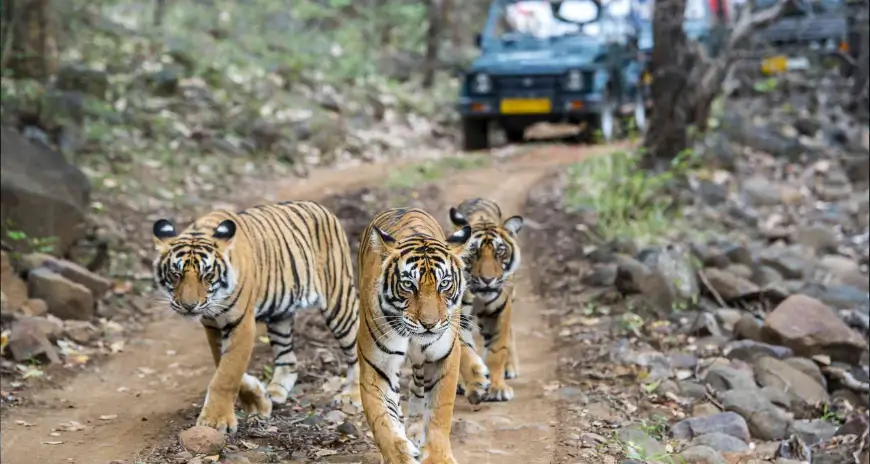
Rise according to the confirmed safari timing and enter Ranthambore National Park in an authorised safari vehicle. The reserve is one of Rajasthan's best-known wildlife areas and is particularly associated with the Royal Bengal tiger. However, the character of Ranthambore comes from the wider landscape as much as from any single animal. Dry forest, rocky ridges, lakes, grassland and remnants of historic structures combine to create an unusual setting for wildlife observation.
Travel through the allotted safari zone while watching for movement among the forest and open clearings. Tigers remain the most sought-after sighting, but wildlife cannot be guaranteed in a natural habitat. Sambar deer, spotted deer, wild boar, langurs, crocodiles and numerous bird species may also be encountered depending on the route, season and conditions. The unpredictability is part of the safari; every drive through the forest develops differently.
After the safari, return to the resort for rest and leisure. Depending on the final package arrangements, the day may include another scheduled safari or free time at the property. The two-night stay avoids making wildlife viewing dependent on an immediate arrival and departure schedule and provides a more comfortable break within the long overland itinerary. Spend the evening in the quieter surroundings of Ranthambore.
Overnight stay in Ranthambore
Have breakfast and leave Ranthambore for Jaipur. The journey moves away from forest territory and returns to the architectural and cultural themes that have shaped much of the tour. Jaipur occupies an important position near the end of the itinerary because, after seeing numerous former princely centres, travellers can compare the Pink City's planned layout and eighteenth-century architecture with the older settlements visited earlier.
Arrive in Jaipur and transfer to the hotel. Once settled, head towards the old city for an introductory outing through its market streets and characteristic pink façades. Jaipur's historic commercial quarters remain associated with jewellery, gemstones, textiles, block printing and handicrafts. The activity of these bazaars demonstrates that the old city continues to function as a commercial centre rather than surviving only as a collection of monuments.
Pause around Hawa Mahal and the surrounding heritage quarter before returning to the hotel. The principal fort and palace sightseeing is reserved for the following day, allowing the first evening to remain relaxed after the drive from Ranthambore. Two nights in Jaipur provide enough time to see the city's major attractions while still appreciating its streets, crafts and everyday urban atmosphere.
Overnight stay in Jaipur
Travel after breakfast to Amber Fort, situated among the hills outside Jaipur. The former royal seat combines strategic fortifications with elegant palace spaces arranged around large courtyards. Passing through the gateways reveals decorated halls, private chambers, balconies and viewpoints across the surrounding hills. The contrast between the fort's imposing outer profile and the sophistication of its inner architecture reflects the dual military and residential roles of Rajasthan's great royal complexes.
Return to Jaipur and continue to City Palace, where courtyards, gateways and museum collections remain closely connected with the city's ruling dynasty. A short distance away, Jantar Mantar contains monumental astronomical instruments commissioned by Maharaja Sawai Jai Singh II. Their size and mathematical design distinguish the observatory from Jaipur's palace architecture and illustrate the intellectual interests of the ruler responsible for planning the city.
Spend the later hours around the old bazaars, where craft traditions remain visible in jewellery, textiles and locally produced goods. After almost three weeks across Rajasthan, Jaipur can now be viewed within a much broader context: its architecture differs from Jaisalmer's sandstone citadel, Jodhpur's rocky fortress, Udaipur's lakeside palaces and Bundi's compact hill setting. Return to the hotel after completing the principal Jaipur sightseeing tour.
Overnight stay in Jaipur
After breakfast, check out from Jaipur and begin the journey towards Agra. Crossing from Rajasthan towards Uttar Pradesh brings the tour back into the architectural world of the Mughal Empire. After nearly three weeks dominated by Rajput kingdoms, Jain temples, desert settlements and wildlife landscapes, Agra provides a distinctly different historical setting for the final overnight stay.
Reach Agra and proceed with the scheduled sightseeing. Visit Agra Fort, the formidable Mughal complex beside the Yamuna River. Its red sandstone walls contain royal residences, audience halls and courtyards associated with several emperors. The fort's architecture reflects both its defensive role and its function as an imperial residence, while its historical connection with Shah Jahan creates a direct link with the Taj Mahal planned for the following morning.
After the fort visit, transfer to the hotel and enjoy the final evening of the tour at a relaxed pace. Agra represents an appropriate final overnight destination because it shifts the journey away from Rajasthan's regional royal traditions towards the imperial architecture of the Mughals. The following morning is reserved for the Taj Mahal, allowing the most celebrated monument on the route to be seen without combining it with a late arrival.
Overnight stay in Agra
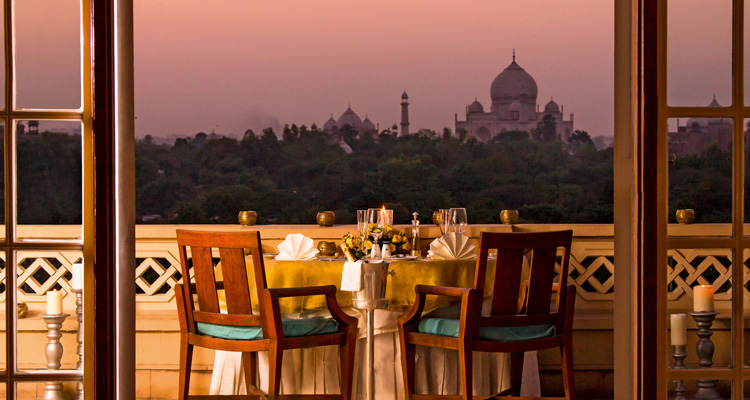
Begin the final day with a visit to the Taj Mahal, the white-marble mausoleum commissioned by Emperor Shah Jahan in memory of Mumtaz Mahal. Approaching through the monumental gateway gradually reveals the carefully balanced composition of the main mausoleum, gardens and surrounding buildings. Its reputation rests not simply on scale or white marble but on the precision with which architecture, calligraphy, stone inlay and landscape design were brought together.
Walk closer to the principal structure to observe floral inlay, carved marble and calligraphic decoration that cannot be fully appreciated from the distant garden viewpoints. The monument's symmetry creates an impression of simplicity from afar, yet its surfaces contain an exceptional level of craftsmanship. After travelling through Rajasthan's frescoed havelis, sandstone forts, Jain temples and painted palace rooms, the Taj Mahal provides a markedly different architectural finale.
After the visit, leave Agra and continue towards Delhi for the scheduled airport transfer or onward travel arrangement. The twenty-one-day route has crossed desert settlements, hill country, lake cities, pilgrimage and temple landscapes, wildlife territory and some of northern India's most important royal centres. Arrival in Delhi brings the extended overland circuit to its scheduled endpoint.
14 Nights / 15 Days
Delhi – Agra – Fatehpur Sikri – Abhaneri – Jaipur – Pushkar – Jodhpur – Jaisalmer – Sam Sand Dunes – Bikaner – Mandawa – Delhi
06 Nights / 07 Days
Jodhpur – Osian – Jaisalmer – Sam Sand Dunes – Bikaner – Delhi
09 Nights / 10 Days
Delhi - Agra - Ranthambore - Jaipur - Udaipur - Delhi
12 Nights / 13 Days
Delhi - Jaipur - Jodhpur - Jaisalmer - Udaipur - Delhi