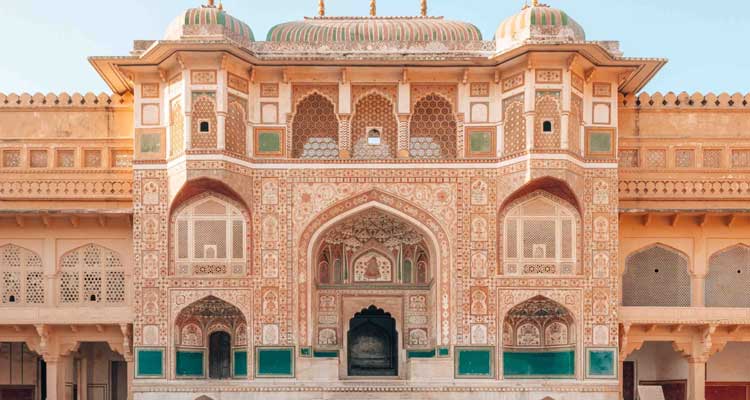
Your Travel Partner
SINCE 1989
Your Travel Partner
SINCE 1989
Jaipur
Jaipur rewards travellers who give it more than a single rushed sightseeing day. Behind its famous pink façades lies a layered capital shaped by an older hill kingdom, a carefully planned walled city, royal residences, astronomical knowledge, craft traditions and forts positioned across the surrounding Aravalli ridges. The Jaipur Tour Package 3 Days – Amber Fort, City Palace & Nahargarh provides enough time to see these different sides of the city while keeping daily travel comfortable.
The programme begins within Jaipur's historic centre. Hawa Mahal, City Palace and Jantar Mantar stand close together, yet each represents a different element of the city's identity. The palace recalls Jaipur's royal administration and ceremonial traditions, Jantar Mantar reflects the scientific ambitions of Maharaja Sawai Jai Singh II, and Hawa Mahal has become the architectural symbol of the Pink City's street-facing heritage.
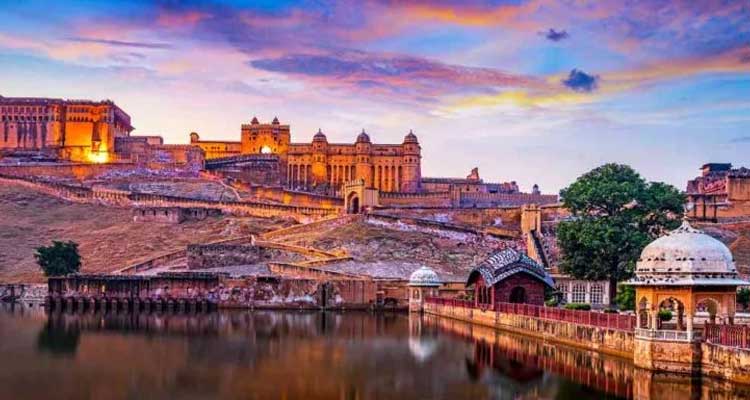
A separate day is devoted to Amber Fort and Jaipur's northern heritage belt. Amber predates the present city and provides the historical background needed to understand why Jaipur was later established on the plains. Massive defensive walls surround refined palace spaces, while the elevated setting above Maota Lake illustrates how geography influenced the earlier royal capital.
The itinerary also includes Nahargarh Fort, whose hilltop position provides a completely different perspective. Rather than viewing Jaipur only from street level, visitors can see the scale of the modern city spreading beyond its historic walled core. The fort and ridge setting also demonstrate how Jaipur's surrounding hills formed part of a broader defensive landscape.
With two nights in one hotel, this 3-day Jaipur tour package avoids unnecessary packing and long-distance transfers. There is enough time for traditional markets, handicrafts and photography without sacrificing the major monuments. It is particularly suitable for first-time Jaipur visitors, couples, families and international travellers who want a more complete introduction to Rajasthan's capital while keeping the journey compact.
Arrive in Jaipur by flight, train or road and meet your driver at the confirmed arrival point. Transfer to the hotel and complete the check-in formalities. Once refreshed, begin the first introduction to Rajasthan's capital within its historic walled centre, where Jaipur's distinctive urban identity is most clearly visible.
Start around Hawa Mahal, whose remarkable façade rises directly beside the old market streets. Rows of small openings and projecting windows give the structure its unmistakable appearance. Its location is equally important: Hawa Mahal is integrated into a living commercial district rather than separated from the city behind large gardens or fortifications.
Continue to City Palace, positioned at the royal heart of Jaipur. Walk through the principal accessible courtyards and gateways while learning how the palace formed part of the planned capital created under Maharaja Sawai Jai Singh II. Architectural elements developed over different periods create a mixture of ceremonial spaces, former administrative areas and royal residences.
Proceed to Jantar Mantar, located close to City Palace. The observatory contains monumental instruments constructed for astronomical measurement and calculation. Their scale allows complex scientific ideas to be expressed through architecture, making Jantar Mantar one of Jaipur's most distinctive heritage sites and a sharp contrast to the palaces and forts usually associated with Rajasthan.
Finish the afternoon with time in selected Pink City bazaars. Traditional market areas remain known for gemstones, jewellery, textiles, block-printed fabrics and handicrafts. Shopping is entirely optional; travellers more interested in street photography or architecture can instead use the time to walk through the historic commercial quarters before returning to the hotel.
Overnight stay in Jaipur.
After breakfast, leave central Jaipur and drive towards Amber Fort, situated among the Aravalli hills north of the city. The approach provides a dramatic change from Jaipur's straight market streets, with fortified walls extending across the ridges and Amber's palace complex rising above Maota Lake.
Amber was the principal royal seat before Jaipur was established, and its architecture combines defensive planning with sophisticated palace design. Enter through the major gateways and continue into broad courtyards that once served different ceremonial and administrative functions. As the visit progresses, the heavy fortifications give way to more intricate royal spaces.
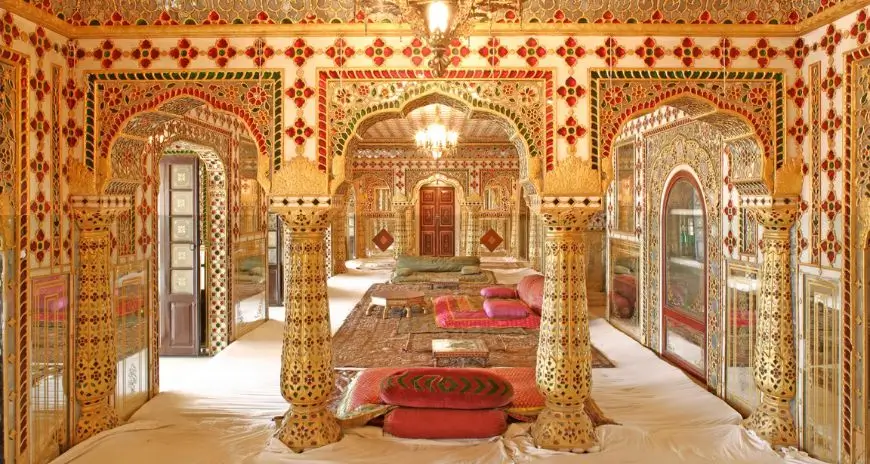
Spend time inside the important palace sections, observing carved stonework, decorated surfaces, balconies and carefully arranged courtyards. Elevated areas provide views across Maota Lake and the surrounding hills, reinforcing how strongly the fort's design was connected with its landscape. The visit is paced to allow Amber to be understood rather than reduced to a quick photo stop.
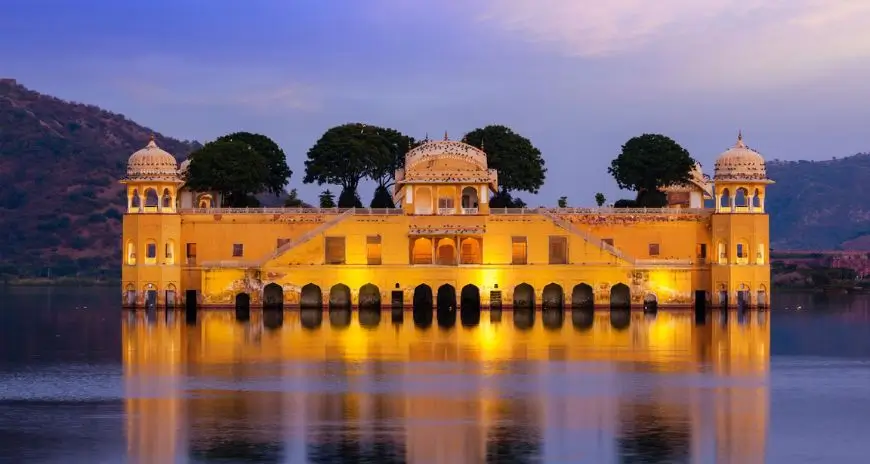
Return towards Jaipur and pause near Jal Mahal, the palace standing within Man Sagar Lake. The building is generally viewed from the waterfront roadside area, where its low profile appears against the surrounding hills. This remains a short scenic stop, leaving sufficient time for the major hilltop visit later in the day.
Continue towards Nahargarh Fort, positioned high above Jaipur. The ascent offers an increasingly broad view of the city, and from the ridge it becomes possible to appreciate how dramatically Jaipur has expanded beyond the boundaries of its original walled plan. Nahargarh formed part of the defensive landscape surrounding the royal capital and provides a different architectural experience from Amber.
Spend the later part of the visit enjoying the fort surroundings and panoramic viewpoints before descending back towards the city. The combination of Amber and Nahargarh makes the day strongly focused on Jaipur's hilltop heritage, while the previous day remains centred on the planned Pink City. Return to the hotel after sightseeing.
Overnight stay in Jaipur.
Enjoy breakfast and begin the final morning according to the confirmed departure time. Since the principal monuments have already been covered across the first two days, the remaining hours can be adapted more closely to individual interests instead of repeating major attractions or creating an unnecessarily crowded final schedule.
Travellers interested in Jaipur's artistic traditions can use the morning for carefully selected handicraft and textile areas. The city has long-established connections with block printing, jewellery making, gemstones, blue pottery and decorative crafts. Visiting reputable workshops or market districts can provide useful insight into the skills that continue alongside Jaipur's architectural heritage.
Alternatively, the available time may be kept for a relaxed local drive, photography or personal shopping. Families and travellers with an early departure can simply enjoy breakfast and leave directly for their onward connection. This flexibility is especially useful because flight and train timings vary considerably, and a fixed half-day programme can otherwise make the final day impractical.
At the appropriate time, transfer privately to Jaipur Airport, Jaipur railway station or another confirmed departure location. The three-day programme concludes after connecting the city's major historical layers: the older royal capital at Amber, the carefully planned Pink City, the scientific legacy of Jantar Mantar and the hilltop perspective offered by Nahargarh.
For travellers seeking a compact Jaipur sightseeing tour for 3 days, the route provides substantially more depth than a same-day visit while remaining easy to combine with Delhi, Agra or a longer Rajasthan itinerary.
10 Nights / 11 Days
Delhi - Agra - Jaipur - Jodhpur - Udaipur - Delhi
13 Nights / 14 Days
Delhi - Mandawa - Bikaner - Jaisalmer - Jodhpur - Udaipur - Jaipur - Agra