Your Travel Partner
SINCE 1989
Your Travel Partner
SINCE 1989
Delhi – Mandawa – Bikaner – Jaisalmer – Jodhpur – Ranakpur – Udaipur – Ajmer – Pushkar – Jaipur – Fatehpur Sikri – Agra – Delhi
Crossing Rajasthan from the fresco-covered towns of Shekhawati to the sandstone cities of the Thar Desert and then returning through Mewar, Pushkar, Jaipur and Agra creates one of the most varied road journeys in northern India. This Rajasthan Tour Package 11 Nights 12 Days follows that broad circuit from Delhi, giving travellers a combination of merchant havelis, desert forts, Jain temples, lake palaces, pilgrimage centres, Rajput architecture and Mughal monuments.
The route begins with Mandawa, where Rajasthan's heritage appears through private merchant residences rather than enormous royal palaces. Shekhawati's historic havelis are distinguished by fresco-covered walls, decorative gateways, internal courtyards and façades that reflect the prosperity of trading families who once maintained strong commercial connections beyond Rajasthan.
From Mandawa, the journey reaches Bikaner, an important former princely capital on the edge of the desert. Junagarh Fort stands apart from many Rajasthan forts because it was built on relatively level ground. Its powerful defensive walls protect richly decorated courtyards and palace rooms, creating a striking introduction to the royal architecture of the desert region.
The road then continues deeper into western Rajasthan for two nights in Jaisalmer. Golden sandstone dominates the historic city, from its inhabited fort to intricately carved Jain temples and merchant havelis. Staying for two nights gives travellers time to understand why Jaisalmer developed such a distinctive architectural identity within the Thar Desert.
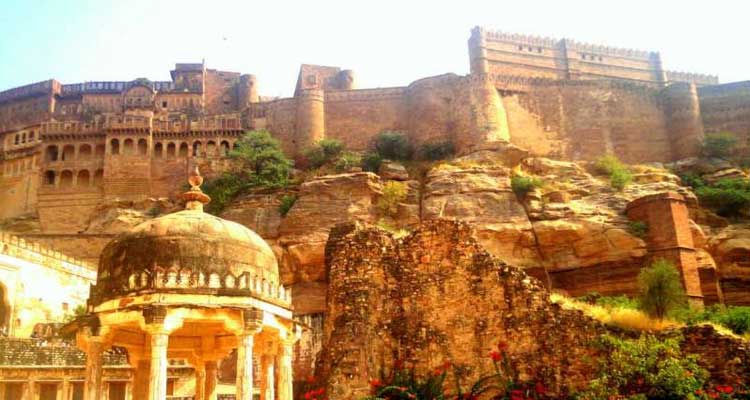
Jodhpur follows with the monumental Mehrangarh Fort overlooking the historic Blue City. Although only one night is scheduled, the itinerary gives the fort and old-city character a central place before the route turns south towards the Aravalli hills.
The journey from Jodhpur to Udaipur includes Ranakpur Jain Temple, where marble pillars, carved ceilings and intricate religious architecture provide a sharp contrast to the defensive forts visited earlier. From Ranakpur, the landscape changes noticeably as the route approaches the greener surroundings of Mewar.
Two nights in Udaipur slow the pace at an ideal point in the journey. City Palace rises above Lake Pichola, while Jagdish Temple, the old quarter and landscaped gardens reveal a side of Rajasthan shaped by water, hills and palace architecture rather than desert geography.
The route then turns north through Ajmer and Pushkar. Ajmer introduces an important centre of Islamic pilgrimage through the area associated with Ajmer Sharif Dargah, while nearby Pushkar is deeply connected with Hindu pilgrimage traditions through Pushkar Lake and the Brahma Temple. Their proximity makes them a particularly interesting cultural pairing.
Two nights in Jaipur provide enough time for Amber Fort and the principal monuments of the Pink City. The final road sector then leaves Rajasthan through Fatehpur Sikri before reaching Agra, where the Taj Mahal provides the defining Mughal landmark of the journey.
For travellers searching for a 12 days Rajasthan tour from Delhi, this itinerary offers considerable geographical range without turning every day into a simple transfer. The sequence moves naturally through northern Rajasthan, the Thar region, Marwar, Mewar and eastern Rajasthan before finishing with Fatehpur Sikri and Agra.
Meet the representative or private driver at the confirmed location in Delhi and begin the journey towards Mandawa. Rather than using the opening day for Delhi sightseeing, the route heads directly into Rajasthan, allowing more time for the destinations included in the package.
As the journey leaves the National Capital Region, the urban environment gradually gives way to smaller towns and increasingly dry landscapes. The destination lies within Shekhawati, a region famous for the elaborate residences constructed by prosperous merchant families.
Arrive in Mandawa and check into the selected hotel or heritage property. After refreshing, begin exploring selected streets containing historic painted havelis. Frescoes decorate many surviving façades and interior areas, although access to individual properties may depend on current conditions.
Look closely at the architectural form of the residences as well as their paintings. Ornamental gateways, projecting balconies and internal courtyards illustrate the domestic architecture of wealthy trading communities and provide a very different beginning from Rajasthan's better-known palace cities.
Spend the evening within Mandawa's relatively quiet surroundings before returning to the hotel.
Overnight stay in Mandawa.
After breakfast, leave Mandawa and continue towards Bikaner. The journey moves farther west into Rajasthan, where the environment becomes progressively drier and the architectural traditions increasingly reflect the desert region.
On arrival, check into the hotel before proceeding towards Junagarh Fort. Unlike Rajasthan's famous hilltop forts, Junagarh was constructed on relatively level terrain and relied on formidable walls, gateways and defensive planning.
Enter the fort and explore its accessible courtyards and former palace sections. The strong exterior gives way to more decorative interiors containing carved details, balconies, ceremonial spaces and rooms associated with Bikaner's former royal court.
The visit provides an opportunity to understand how Rajasthan's princely states developed individual architectural identities. Bikaner's royal heritage differs from both Shekhawati's merchant architecture and the golden sandstone environment that will dominate the next major destination.
After sightseeing, return to the hotel or spend some time experiencing an appropriate local market area according to the remaining daylight.
Overnight stay in Bikaner.
Leave Bikaner after breakfast and travel towards Jaisalmer. This longer road sector takes the journey progressively deeper into western Rajasthan and provides a strong sense of the scale of the desert region.
Observe the changing landscape during the drive. Settlements become more widely spaced, vegetation changes and the environment provides valuable geographical context for understanding how historic trading cities survived and prospered in this part of Rajasthan.
Approaching Jaisalmer, the visual palette changes as golden-yellow sandstone becomes increasingly prominent. The massive Jaisalmer Fort rises above the surrounding city and remains visible from numerous approaches.
Check into the selected hotel for a two-night stay. The additional night is important because it prevents the Golden City from becoming a rushed sightseeing stop between long road journeys.
Spend the evening at leisure or take a gentle orientation through nearby areas according to arrival time. The principal fort, temples and havelis are reserved for the following day.
Overnight stay in Jaisalmer.
Begin the day with Jaisalmer Fort, whose golden sandstone walls dominate the historic city. Unlike many preserved forts, Jaisalmer remains a living settlement containing residences, shops, religious buildings and active lanes within its fortified boundaries.
Walk through the fort's narrow streets and explore its accessible historical areas. The use of sandstone across walls, façades, balconies and religious structures gives the entire settlement a remarkably unified architectural appearance.
Visit the historic Jain temples according to current opening schedules and access regulations. Their intricately carved interiors demonstrate extraordinary stone craftsmanship and provide an important religious dimension to the fort's heritage.
Continue into the lower city to see selected traditional merchant havelis. Finely carved façades, projecting balconies and decorative screens reveal the wealth associated with Jaisalmer's historical role in regional trade.
Spend the remaining afternoon walking through the old city at a comfortable pace. The package route is centred on Jaisalmer itself, allowing its fort and urban heritage to remain the focus of the two-night stay.
Overnight stay in Jaisalmer.
After breakfast, leave Jaisalmer and travel east towards Jodhpur. Although both cities belong to western Rajasthan, their architectural character is markedly different. Jaisalmer is visually defined by golden sandstone, while Jodhpur is dominated by the dark rocky height of Mehrangarh Fort and the blue-painted neighbourhoods below.
Arrive in Jodhpur and check into the selected hotel. After refreshing, proceed towards Mehrangarh Fort, subject to arrival time and official opening hours. Rising almost directly from the rocky escarpment, the fortress creates one of Rajasthan's most dramatic architectural silhouettes.
Pass through the defensive gateways and enter the former royal areas. Courtyards, stone screens, balconies and decorated chambers contrast with the enormous walls surrounding them, revealing the combination of military strength and refined court life.
From the elevated viewpoints, look across the historic Blue City. Continue to Jaswant Thada if time permits, where pale marble architecture creates a quieter contrast with the massive fortress nearby.
Spend the evening around the Clock Tower and Sardar Market area or return to the hotel after sightseeing.
Overnight stay in Jodhpur.
Leave Jodhpur after breakfast and travel south towards Ranakpur. The landscape gradually changes as the journey moves away from Marwar and enters the Aravalli region.
Visit the magnificent Ranakpur Jain Temple according to current visitor timings. The complex is renowned for its extensive marble architecture, elaborately carved pillars, ceilings and domed spaces.
Take time to appreciate the difference between Ranakpur and the monuments visited earlier. After the defensive scale of Junagarh, Jaisalmer and Mehrangarh, the focus here is on religious craftsmanship, symmetry and the intricate treatment of marble.
Ranakpur remains an active place of worship, and visitors should observe current regulations concerning footwear, clothing, photography and restricted items. Respect for religious practices is essential throughout the visit.
Continue towards Udaipur, where the surroundings become increasingly green and hilly. On arrival, check into the selected hotel for a two-night stay and spend the evening at leisure around the lake-city environment.
Overnight stay in Udaipur.
Begin at Udaipur City Palace, the extensive royal complex positioned above Lake Pichola. Constructed and expanded by generations of Mewar rulers, the palace contains interconnected courtyards, terraces, gateways and former royal chambers.
Explore the accessible sections while observing decorative balconies, windows, stonework and interiors. The elevated viewpoints reveal the relationship between the palace, Lake Pichola, surrounding hills and the historic city below.
Continue to Jagdish Temple, situated close to City Palace. The temple and adjoining old-city lanes provide a more intimate architectural setting and bring travellers into areas where religious life, traditional shops and historic buildings exist side by side.
Later, visit Saheliyon Ki Bari, known for its garden setting, fountains and pavilions. The landscaped environment provides a quieter counterpoint to the scale of City Palace.
Spend the evening around the lakefront. An optional boat ride may be arranged separately subject to weather, operating schedules and the confirmed package.
Overnight stay in Udaipur.
After breakfast, leave Udaipur and begin the journey north towards Ajmer. The day's route is culturally significant because it connects two important pilgrimage centres situated relatively close to one another but associated with different religious traditions.
In Ajmer, visit the area associated with Ajmer Sharif Dargah, subject to current access arrangements and local conditions. The shrine is associated with the Sufi saint Khwaja Moinuddin Chishti and attracts pilgrims from different parts of India and beyond.
The lanes approaching the shrine can be busy and crowded. Visitors should follow local guidance regarding footwear, appropriate clothing, belongings, photography and respectful behaviour within religious areas.
Continue afterwards towards Pushkar and check into the selected hotel. Visit Pushkar Lake and walk around appropriate sections of its sacred ghats, where religious rituals remain part of everyday life.
Visit the Brahma Temple according to current opening hours and temple regulations. Spend the evening exploring Pushkar's compact streets before returning to the hotel.
Overnight stay in Pushkar.
Begin the morning at a relaxed pace before leaving Pushkar for Jaipur. The relatively manageable road sector provides a useful transition from the compact pilgrimage town to Rajasthan's busy state capital.
Arrive in Jaipur and check into the selected hotel for a two-night stay. After refreshing, begin with an introductory exploration of the historic walled city rather than immediately attempting the complete monument circuit.
Head towards Hawa Mahal, whose multi-windowed façade forms one of Jaipur's most recognisable architectural compositions. Its location along the old city's commercial streets makes it a natural starting point for understanding the relationship between royal architecture and Jaipur's markets.
Continue through selected bazaars, where jewellery, gemstones, textiles, handicrafts and traditional goods remain central to Jaipur's commercial identity. The organised street pattern also reflects the deliberate planning of the historic capital.
Return to the hotel after the orientation. Amber Fort, City Palace and Jantar Mantar are reserved for the following day.
Overnight stay in Jaipur.
Begin with Amber Fort, the former royal seat located among the hills outside Jaipur. Its strategic elevated setting and defensive architecture reveal the earlier political geography of the Kachwaha kingdom before Jaipur was established on the plains.
Enter through the fort's monumental gateways and explore the principal courtyards and palace areas. Massive fortifications contrast with decorative interiors, carved details, balconies and former ceremonial spaces.
Return towards Jaipur, pausing near Jal Mahal where stopping regulations permit. Continue to City Palace, situated at the heart of the planned Pink City and representing the later phase of Jaipur's royal development.
Walk to nearby Jantar Mantar to see the monumental astronomical instruments commissioned for precise observation and calculation. The site introduces an intellectual and scientific dimension to the city's royal heritage.
Complete the day around Hawa Mahal or the traditional markets before returning to the hotel.
Overnight stay in Jaipur.
Leave Jaipur after breakfast and travel east towards Fatehpur Sikri. The journey marks the departure from Rajasthan and a transition towards the Mughal architectural heritage associated with Agra.
Visit Fatehpur Sikri, the former imperial capital established under Emperor Akbar. Its extensive red sandstone structures include monumental gateways, courtyards, palace spaces and religious architecture arranged within a carefully planned complex.
Walk through the accessible sections while observing the shift in architectural language from the Rajput forts and palaces experienced throughout Rajasthan. The site demonstrates the scale and ambition associated with Mughal imperial planning.
After the visit, continue towards Agra. On arrival, check into the selected hotel. Depending on timing and the final sightseeing arrangement, visit Agra Fort or keep the evening relaxed before the Taj Mahal visit.
The overnight stay avoids treating Agra as a hurried roadside stop and provides a fitting final destination after the long Rajasthan circuit.
Overnight stay in Agra.
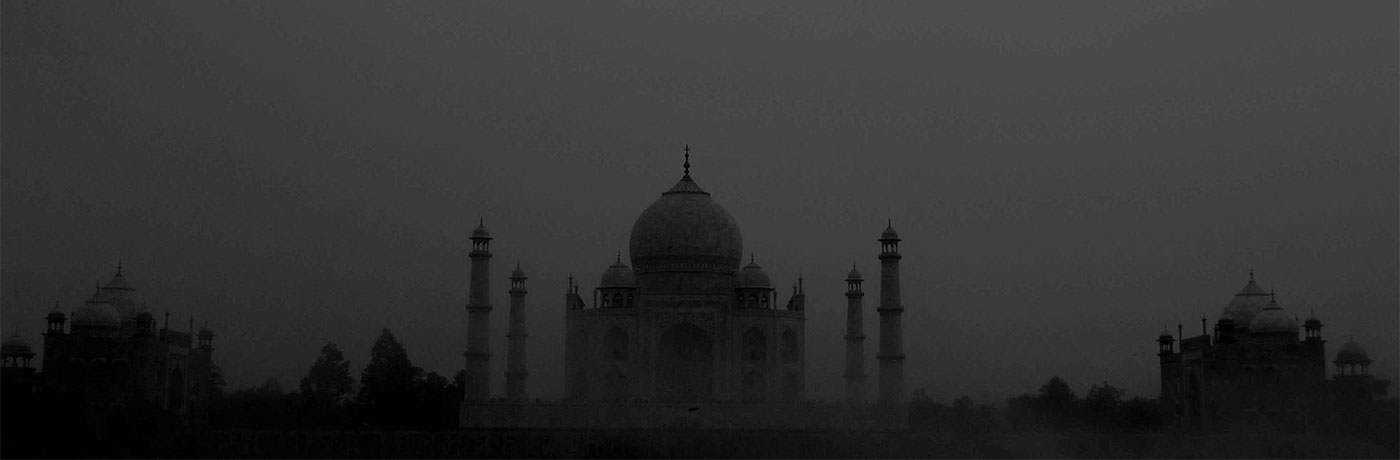
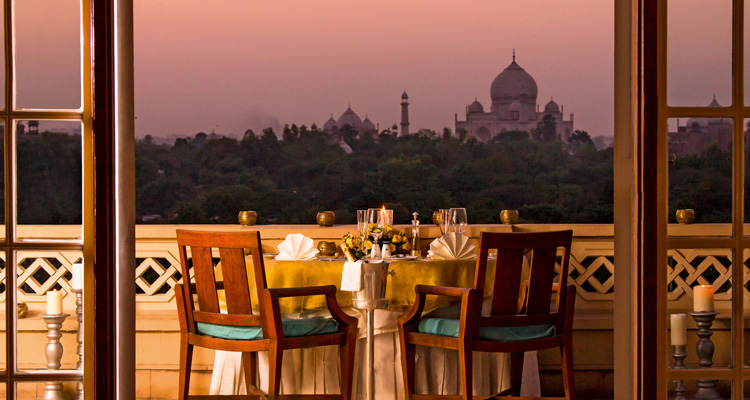
Begin the final day with the Taj Mahal, subject to official opening schedules. Enter through the monumental gateway and approach the white marble mausoleum through its formal garden, where symmetry and carefully planned perspectives form an essential part of the overall design.
Spend sufficient time examining the monument beyond the familiar distant view. Marble inlay, calligraphic decoration, architectural proportion and the surrounding structures demonstrate the craftsmanship behind the complex.
If Agra Fort was not visited the previous day and the departure schedule permits, include it before leaving Agra. The red sandstone fort contains former imperial spaces and provides another perspective on the Mughal history of the city.
After sightseeing, begin the drive towards Delhi. The return journey completes a circuit that has crossed Shekhawati, the Thar region, Marwar, Mewar, Pushkar and Jaipur before moving into the Mughal heritage corridor of Fatehpur Sikri and Agra.
On reaching Delhi, transfer to the airport, railway station, hotel or another confirmed location according to the final travel arrangements, completing the Rajasthan Tour Package 11 Nights 12 Days – Delhi to Delhi with Taj Mahal.
11 Nights / 12 Days
Mumbai – Amritsar – Delhi – Agra – Jaipur – Jodhpur – Ranakpur – Udaipur – Mumbai
14 Nights / 15 Days
Delhi – Agra – Fatehpur Sikri – Abhaneri – Jaipur – Pushkar – Jodhpur – Jaisalmer – Sam Sand Dunes – Bikaner – Mandawa – Delhi
11 Nights / 12 Days
Delhi – Agra – Jaipur – Pushkar – Jodhpur – Udaipur – Delhi