Your Travel Partner
SINCE 1989
Your Travel Partner
SINCE 1989
Delhi – Mandawa – Bikaner – Jaisalmer – Jodhpur – Ranakpur – Udaipur – Jaipur – Abhaneri – Fatehpur Sikri – Agra – Varanasi – Delhi
Few journeys across North India create as broad a cultural progression as a route that begins with Rajasthan's merchant towns and desert kingdoms, passes through the Taj Mahal and finishes beside the sacred Ganges in Varanasi. The 14 Days Rajasthan Agra Varanasi Tour has been designed around exactly that progression, connecting Delhi, Mandawa, Bikaner, Jaisalmer, Jodhpur, Ranakpur, Udaipur, Jaipur, Abhaneri, Fatehpur Sikri, Agra and Varanasi within one substantial itinerary.
Rather than beginning immediately with Rajasthan's famous palace cities, the route first reaches Mandawa in the Shekhawati region. Its painted havelis tell the story of merchant families whose wealth was expressed through fresco-covered residences, elaborate façades and internal courtyards. This gives the tour a distinctive opening because Rajasthan is introduced through commercial and residential heritage before the royal forts become dominant.
The next stage reaches Bikaner, where Junagarh Fort demonstrates an unusual form of Rajasthan fort architecture. Unlike many celebrated strongholds positioned high on hills or rocky cliffs, Junagarh was established on comparatively level ground. Behind its powerful defensive exterior are palace sections, courtyards and decorative interiors that reveal the sophistication of Bikaner's former royal court.
From Bikaner, the landscape becomes progressively more closely associated with the Thar Desert as the journey heads towards Jaisalmer. Two nights in the Golden City allow its living fort, Jain temples and elaborate merchant havelis to be explored without compressing everything into a short stop. Golden sandstone unifies much of Jaisalmer's historic architecture and gives the city a visual identity unlike anywhere else on this itinerary.
The journey then turns towards Jodhpur, where Mehrangarh Fort towers over the blue-painted quarters of the old city. The transition from Jaisalmer to Jodhpur also marks a movement between two different desert-region capitals: one historically associated with caravan trade and golden sandstone, the other with the powerful Rathore kingdom of Marwar.
Travelling south from Jodhpur, the route passes through Ranakpur, where Jain religious architecture replaces military fortification as the main focus. Intricate marble pillars, domes and carved ceilings create one of the journey's most detailed architectural environments before the road continues into the greener Aravalli region.
Two nights in Udaipur bring another dramatic shift. Here Rajasthan is defined by lakes, hills and the royal heritage of Mewar rather than desert landscapes. City Palace overlooks Lake Pichola, while temples, old streets and waterfront areas give travellers a more relaxed urban setting after the fortified cities of western Rajasthan.
The second half of the journey continues through Jaipur before linking Rajasthan with the Mughal heritage of Fatehpur Sikri and Agra. Abhaneri adds the geometric architecture of its historic stepwell along the way, creating another layer of architectural variety before the Taj Mahal becomes the principal landmark in Agra.
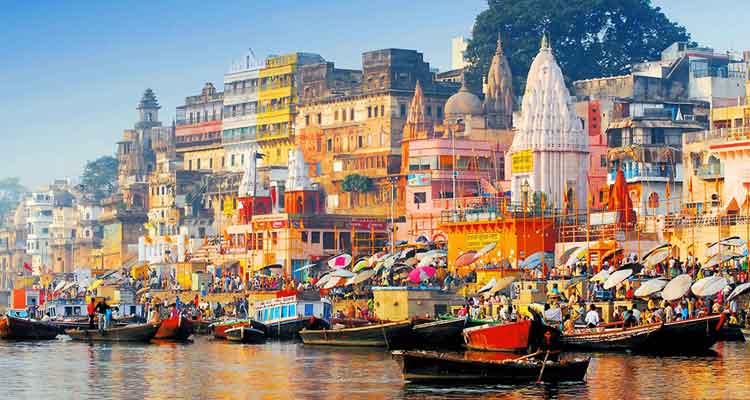
The final major destination is Varanasi, where the focus changes completely from royal and imperial history to one of India's most important sacred landscapes. The ghats beside the Ganges, religious ceremonies, old lanes and living traditions of pilgrimage provide an ending based on faith and continuity rather than palaces and forts.
This Rajasthan Agra Varanasi tour package therefore works particularly well for travellers seeking more than a standard Rajasthan circuit. Merchant havelis, desert architecture, Rajput forts, Jain temples, stepwells, Mughal monuments and the sacred riverfront of Varanasi are connected within a route that reveals several very different expressions of North Indian history and culture.
Arrive in Delhi and meet the representative or private driver at the airport, railway station or another confirmed arrival point. Transfer to the selected hotel and complete check-in for the first night of the journey. Delhi serves as the practical and historical gateway before the route moves west towards Rajasthan.
The programme remains deliberately flexible on arrival because travellers may reach Delhi at very different times. Those arriving after a long international flight can use the day for rest, while an earlier arrival may allow a limited orientation through selected areas of the capital.
If time permits, drive through parts of New Delhi to see the broad avenues and formal administrative districts that distinguish it from the dense historic quarters of the older city. Any sightseeing should be adjusted to the actual arrival time rather than forcing major monuments into a shortened schedule.
The route from the following morning takes a less conventional direction. Instead of beginning with Jaipur or Agra, the journey heads towards the Shekhawati region, introducing Rajasthan through merchant heritage and painted havelis.
Spend the evening at leisure and prepare for the road journey to Mandawa.
Overnight stay in Delhi.
Leave Delhi after breakfast and travel towards Mandawa, crossing into Rajasthan and the historic Shekhawati region. The changing surroundings gradually replace the metropolitan scale of Delhi with smaller towns and the semi-arid landscapes of northern Rajasthan.
On arrival, check into the selected hotel or heritage property before beginning an exploration of Mandawa. The town became closely associated with prosperous merchant families who commissioned elaborate havelis decorated with frescoes.
Walk through selected historic streets and examine the painted façades where access permits. The artwork may contain religious subjects, floral and geometric decoration and imagery reflecting social changes during the period in which the houses were constructed and embellished.
The architectural form of the havelis is equally important. Decorative entrances lead into courtyards and residential areas, while projecting balconies and painted external walls allowed merchant families to express status through private architecture.
Return to the hotel after the heritage walk. Mandawa's smaller scale provides a deliberate contrast to the royal capitals that appear later in the journey.
Overnight stay in Mandawa.
After breakfast, leave Mandawa and travel towards Bikaner. The road moves farther into Rajasthan's drier northwest, where the surrounding environment increasingly reflects the conditions of the desert region.
Arrive in Bikaner and check into the selected hotel. Later, proceed towards Junagarh Fort, the city's principal royal landmark. Its location on relatively level terrain immediately distinguishes it from many of Rajasthan's famous hill forts.
Enter through the fortified gateways and continue into the complex of courtyards and former palace areas. Behind the strong defensive exterior are richly decorated rooms, balconies and ceremonial spaces developed during different periods of Bikaner's royal history.
The fort demonstrates how royal residences evolved within a defensive complex while incorporating increasingly elaborate interior decoration. This contrast between military exterior and ornate palace architecture becomes one of the most interesting aspects of the visit.
Spend the later part of the day exploring an appropriate section of Bikaner or return to the hotel. The following morning continues deeper west towards Jaisalmer.
Overnight stay in Bikaner.
Leave Bikaner after breakfast and begin the longer road journey towards Jaisalmer. The route crosses increasingly arid areas of western Rajasthan, and the changing landscape forms an important part of the day's experience.
As the journey progresses, settlements become more widely separated and the visual character of the Thar region becomes increasingly apparent. The road demonstrates how Rajasthan's historic cities developed within environments that demanded adaptation to limited water and harsh climatic conditions.
Approaching Jaisalmer, the city's golden sandstone architecture begins to distinguish it from Bikaner's reddish and earth-toned built environment. Jaisalmer Fort rises prominently above the lower city and creates the defining silhouette of the destination.
Check into the selected hotel for a two-night stay. Keeping two nights here provides enough time for the fort, Jain temples and merchant havelis without attempting major sightseeing immediately after the long drive.
Spend the evening at leisure or take a short orientation through nearby streets according to arrival time. The detailed exploration of the Golden City is reserved for the following day.
Overnight stay in Jaisalmer.
Begin with Jaisalmer Fort, one of Rajasthan's most distinctive fortified settlements. The fort remains inhabited, meaning its narrow lanes contain residences, religious buildings, shops and everyday activity alongside historic architecture.
Walk through the accessible sections while observing the warm golden sandstone from which much of the fort is constructed. The colour and texture of the stone change noticeably with the intensity and direction of sunlight, contributing strongly to Jaisalmer's Golden City identity.
Visit the historic Jain temples within the fort area according to current opening schedules. Their intricately carved interiors provide a detailed religious architectural experience within the defensive environment of the fort. Appropriate temple rules concerning footwear, photography and behaviour should be respected.
Continue into the lower city to see selected merchant havelis. Elaborately carved sandstone façades, projecting balconies and ornamental screens demonstrate the prosperity generated through Jaisalmer's historical trading connections.
Use the later afternoon to explore the old streets at a relaxed pace rather than adding unrelated excursions. The master route is centred on Jaisalmer itself, allowing its architectural and commercial heritage to remain the focus.
Overnight stay in Jaisalmer.
After breakfast, leave Jaisalmer and travel towards Jodhpur. The road links two of western Rajasthan's most visually distinctive historic cities, yet their architectural and political histories developed in very different ways.
The drive gradually leaves Jaisalmer's golden sandstone environment behind and approaches the historic Marwar capital. On reaching Jodhpur, the massive outline of Mehrangarh Fort becomes visible above the city from considerable distance.
Check into the selected hotel and proceed with sightseeing according to the available arrival time. Visit Mehrangarh Fort if operating hours permit, entering through its formidable gateways before reaching the more decorative palace sections inside.
From the elevated fort, look across the densely built Blue City neighbourhoods. The panorama demonstrates how the historic settlement developed beneath the protection of Mehrangarh and provides one of the most recognisable urban views in Rajasthan.
If time permits, continue to Jaswant Thada or the Clock Tower market district before returning to the hotel. The day closes in a city whose rugged fort architecture creates a strong contrast with Jaisalmer's merchant-oriented heritage.
Overnight stay in Jodhpur.
Leave Jodhpur after breakfast and travel south towards Ranakpur. The journey gradually moves away from the dry Marwar landscape and into the hills and greener surroundings of the Aravalli region.
Stop at the renowned Ranakpur Jain Temple and visit according to the current visitor schedule. The complex is celebrated for its extensive marble work, carved pillars, domes and ceilings, creating an architectural environment based on extraordinary repetition and fine craftsmanship.
Unlike the military structures visited in Bikaner, Jaisalmer and Jodhpur, Ranakpur is defined by religious architecture and sculptural detail. The shift in scale and purpose gives the temple particular importance within the wider itinerary.
As an active Jain religious complex, Ranakpur should be visited respectfully. Current rules concerning clothing, footwear, photography and restricted belongings should be followed, and access to specific areas may vary according to religious requirements.
Continue afterwards towards Udaipur. On arrival, check into the selected hotel for a two-night stay and spend the evening at leisure or around the lakefront depending on arrival time.
Overnight stay in Udaipur.
Begin the day at Udaipur City Palace, the extensive royal complex overlooking Lake Pichola. Constructed and enlarged over successive generations of Mewar rulers, the palace consists of interconnected courtyards, terraces, gateways and former royal chambers.
Move through the principal accessible sections and observe the combination of defensive positioning and decorative residential architecture. Balconies and elevated viewpoints reveal broad perspectives across the lake, historic neighbourhoods and surrounding Aravalli hills.
Continue to Jagdish Temple, situated close to the palace within Udaipur's historic quarter. The surrounding streets contain traditional buildings, workshops, shops and smaller architectural details that provide a more intimate understanding of the old city.
Later, visit Saheliyon Ki Bari, where fountains, pavilions and landscaped areas introduce a quieter element to the sightseeing programme. Its garden environment creates a contrast with the dense architecture of City Palace and the nearby old-city streets.
Spend the evening around the lakefront or return to the hotel. Optional boating can be arranged separately subject to local operating conditions and confirmed package inclusions.
Overnight stay in Udaipur.
After breakfast, check out from the Udaipur hotel and begin the road journey towards Jaipur. The drive connects two of Rajasthan's most important former royal capitals, but the architectural character of the destinations is remarkably different. Udaipur developed around lakes and the hills of Mewar, while Jaipur was created as a carefully planned urban capital with organised streets, markets and royal precincts.
The journey provides a useful transition after several days in western and southern Rajasthan. By this stage, the route has already passed through the painted merchant heritage of Mandawa, the desert-region architecture of Bikaner and Jaisalmer, the formidable Marwar stronghold of Jodhpur, the Jain temples of Ranakpur and the lake-oriented royal environment of Udaipur. Jaipur introduces yet another expression of Rajasthan's history.
On arrival in Jaipur, transfer to the selected hotel and complete check-in for a two-night stay. Depending on the arrival time, rest at the hotel before heading towards the historic walled city for a gentle introductory visit rather than attempting the entire sightseeing programme after the road journey.
Spend time around the Hawa Mahal area and the adjoining traditional markets. The famous façade provides an immediate introduction to Jaipur's architectural identity, while the surrounding streets reveal the commercial character that continues to define the old city. Jewellery, gemstones, textiles, handicrafts and traditional shops remain closely associated with Jaipur.
Return to the hotel after the evening outing. The following day is reserved for Amber Fort and the principal monuments of the Pink City, allowing the sightseeing to proceed at a more comfortable pace.
Overnight stay in Jaipur.
Begin the morning with a visit to Amber Fort, situated among the Aravalli hills outside central Jaipur. Before Jaipur was established as the later royal capital, Amber served as the principal seat of the Kachwaha rulers. Its hilltop setting, defensive walls and position above Maota Lake create one of Rajasthan's most impressive royal landscapes.
Pass through the monumental gateways and enter the fort's successive courtyards. As the visit progresses, the architecture changes from powerful defensive structures to more elaborate royal spaces. Decorative chambers, carved stonework, balconies and former ceremonial areas reveal the refined court life that existed within the fortified complex.
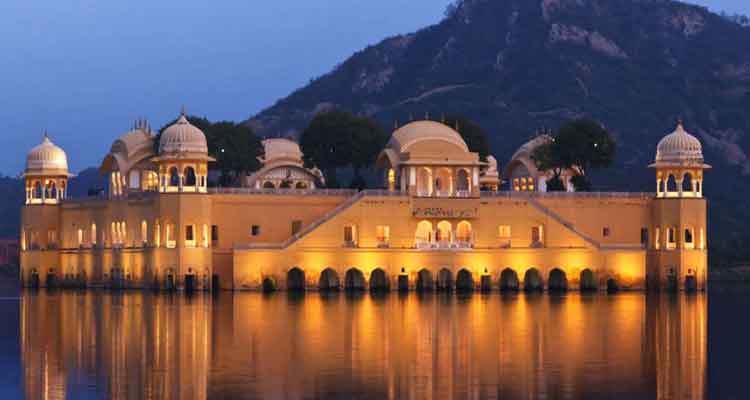
Return towards Jaipur, pausing near Jal Mahal where local traffic and stopping conditions permit. Continue into the historic Pink City to visit City Palace, whose courtyards, gateways and royal buildings stand at the heart of the planned capital. The palace helps explain how Jaipur developed beyond Amber into a larger and more systematically organised royal city.
Walk to nearby Jantar Mantar, where monumental astronomical instruments demonstrate the scientific interests of Maharaja Sawai Jai Singh II. Rather than being decorative structures, the instruments were designed for astronomical observations and calculations, adding a scientific dimension to Jaipur's royal heritage.
Complete the sightseeing with additional time around Hawa Mahal and the traditional bazaars if desired. After a full day covering Jaipur's fort, palace, astronomy and urban heritage, return to the hotel for the evening.
Overnight stay in Jaipur.
Leave Jaipur after breakfast and begin the journey towards Agra. Instead of travelling directly between the two major cities, the route includes Abhaneri and Fatehpur Sikri, making the transfer day one of the most architecturally varied stages of the entire itinerary.
The first significant stop is Abhaneri, known for the remarkable Chand Baori stepwell. Descending geometric flights of steps create a striking architectural pattern while also demonstrating the historical importance of water-management structures in regions where dependable access to water was essential.
Take time to observe the scale and symmetry of the stepwell from the permitted areas. Chand Baori introduces a form of functional architecture completely different from the forts, palaces and temples seen earlier. Its inclusion also connects naturally with Rajasthan's broader tradition of elaborately constructed wells and reservoirs.
Continue towards Fatehpur Sikri, the former Mughal imperial capital associated with Emperor Akbar. Explore the accessible red sandstone courtyards, gateways and palace structures, noting the shift from Rajasthan's Rajput architectural traditions towards the monumental planning of the Mughal court.
After completing the visit, continue to Agra and check into the selected hotel. The Taj Mahal is reserved for the following day so it can be visited according to the appropriate schedule rather than being rushed after two substantial heritage stops.
Overnight stay in Agra.
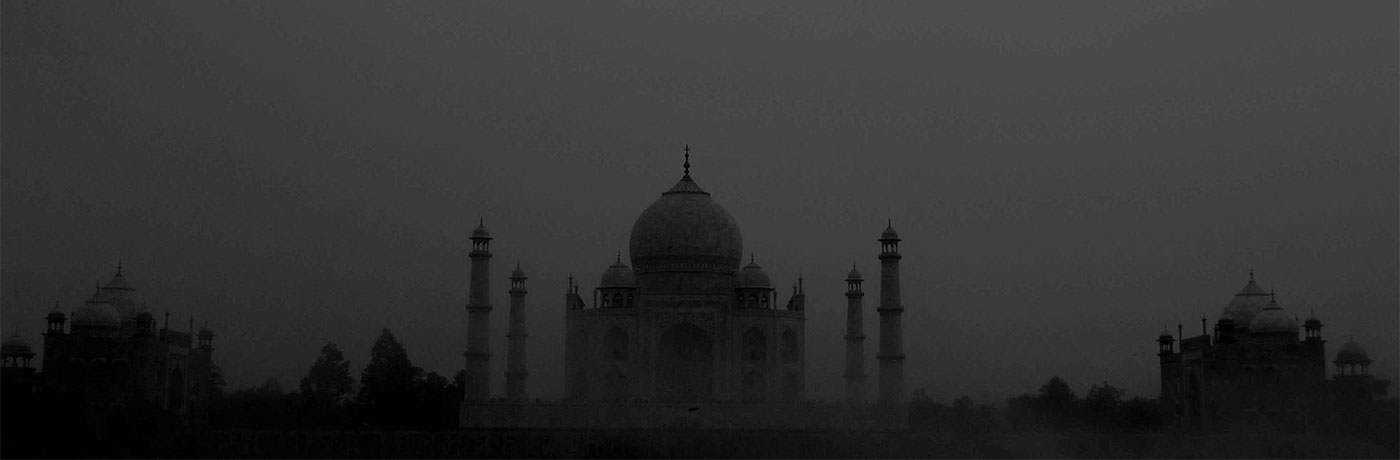
Begin the morning with the Taj Mahal, subject to its official opening schedule. Enter through the monumental gateway and approach the white marble mausoleum through the formal garden, where symmetry and carefully controlled sightlines create one of the most recognisable architectural compositions in the world.
Spend sufficient time examining the monument beyond its famous distant view. Marble inlay work, calligraphy, geometric detailing and the careful proportions of the main structure demonstrate the craftsmanship involved in creating the complex. The surrounding buildings, gardens and riverfront setting are also integral to understanding its overall design.
Depending on the confirmed schedule and available time, continue to Agra Fort. The enormous red sandstone fortification contains former imperial courtyards, palace areas and other structures associated with the Mughal court. Its defensive scale contrasts strongly with the visual delicacy of the Taj Mahal.
After completing the scheduled Agra programme, transfer for the confirmed onward journey to Varanasi. Because the two cities are separated by a substantial distance, the exact flight, train or other ticketed transportation should follow the final booking rather than being assumed within the private road itinerary.
Arrive in Varanasi according to the confirmed schedule and transfer to the selected hotel for a two-night stay. The atmosphere now changes completely: Rajasthan's royal architecture and Agra's Mughal monuments give way to one of India's oldest and most important sacred cities.
Overnight stay in Varanasi.
Begin the Varanasi experience with time along the Ganges ghats, where religious practice is woven directly into everyday life. Depending on the confirmed programme, an early-morning visit may provide an opportunity to observe the riverfront as worshippers gather, rituals take place and the city gradually becomes active.
Walk through selected parts of the historic lanes close to the river. Varanasi's old city cannot be understood through one monument alone. Temples, shrines, residences, small shops, pilgrims and narrow passageways form a dense sacred landscape that has developed over generations.
The day can include visits to selected religious and cultural sites according to current access regulations and the final sightseeing plan. Temple entry requirements can vary, and some areas may have specific restrictions, so local instructions should always be respected.
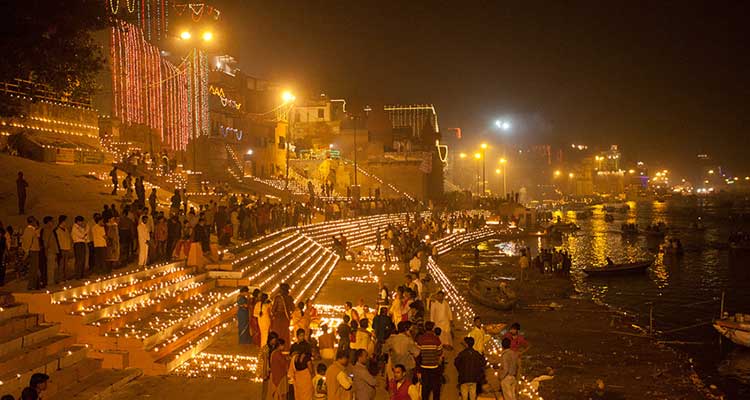
Later, return towards the riverfront for the traditional Ganges Aarti. The evening ceremony brings together lamps, devotional rituals, chanting and large gatherings along the ghats. It should be approached as an active religious ceremony rather than merely an evening performance arranged for visitors.
After the Aarti, return to the hotel through the busy streets of Varanasi. The day provides a striking conclusion to the cultural progression that began with Rajasthan's havelis and forts and continued through Jain and Mughal architecture before reaching the living pilgrimage traditions of the Ganges.
Overnight stay in Varanasi.
The final morning in Varanasi can begin according to the confirmed departure time. Where schedules permit, travellers may spend additional time near the ghats or enjoy a quieter morning at the hotel before checking out. Any optional early-morning boating arrangement should be confirmed separately and remains subject to river and local operating conditions.
Over fourteen days, the route has crossed an unusually broad range of landscapes and architectural traditions. Mandawa introduced Rajasthan through merchant havelis and frescoes, while Bikaner and Jaisalmer carried the journey towards the desert heritage of the state's northwest.
Jodhpur brought the formidable royal architecture of Marwar into focus before Ranakpur and Udaipur changed both the landscape and architectural character of the journey. Jaipur then represented Rajasthan's planned royal urban heritage, while Abhaneri provided an impressive example of historical water architecture.
Fatehpur Sikri and Agra shifted the historical perspective towards the Mughal period, culminating at the Taj Mahal. Varanasi provided an entirely different closing chapter through the Ganges, sacred ghats, temples and religious traditions that remain part of everyday life.
Check out from the hotel and transfer to Varanasi Airport, railway station or another confirmed departure point for the onward journey to Delhi. On arrival in Delhi, continue to the airport, hotel or agreed onward location according to the final arrangements, completing the 14 Days Rajasthan Agra Varanasi Tour.
13 Nights / 14 Days
Jaipur-Bikaner-Jaisalmer-Jodhpur-Rankpur-Mountabu-Udaipur-Chittor-Ranthambore-Jaipur
08 Nights / 09 Days
Delhi – Jaipur – Abhaneri – Fatehpur Sikri – Agra – Orchha – Khajuraho – Varanasi – Delhi
10 Nights / 11 Days
Delhi – Agra – Fatehpur Sikri – Abhaneri – Jaipur – Pushkar – Jodhpur – Ranakpur – Udaipur – Delhi